
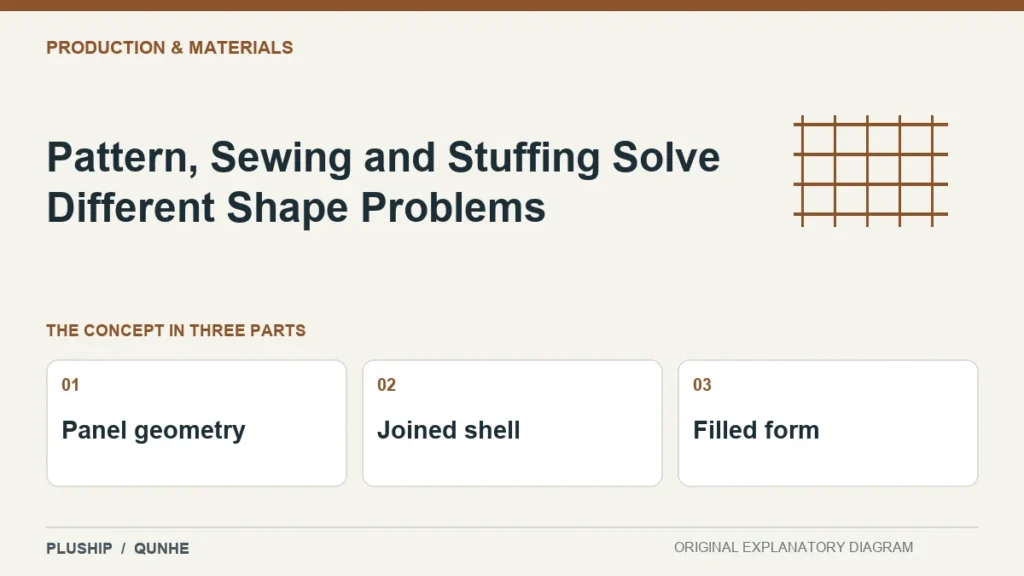
When a character looks different in soft form, the cause may belong to panel geometry, assembly or filling. Calling every shape problem a pattern problem can send the team toward the wrong change.
Budsies' published process describes pattern development, sewing and stuffing as distinct parts of creating its custom plush products. Budsies — How we make custom stuffed animals.
Describe the observed difference
Identify the feature that changed: a contour, feature position or volume relationship. Ask which stage could influence that observation and what trial would distinguish the possibilities. The example provides a useful vocabulary, not a diagnosis of another supplier's process.
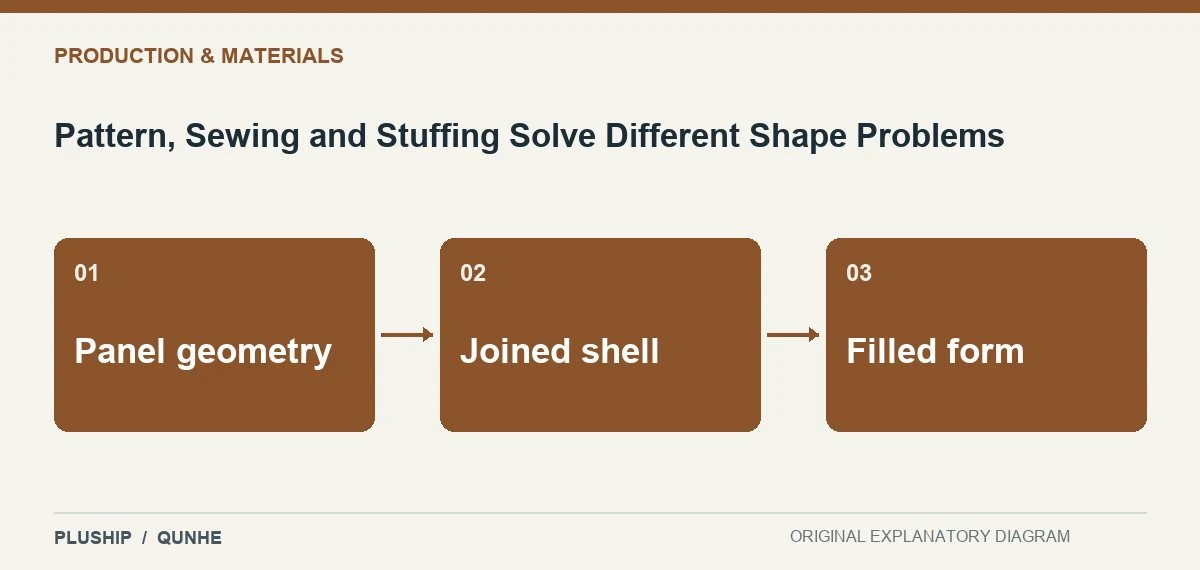
Evaluate the completed form
A flat panel or empty shell cannot show every effect of the assembled and filled product. Review evidence at the stage relevant to the requirement. Preserve the approved result and the conditions needed to reproduce it.
A focused change is easier to judge than a broad request to make the character look better. Connect the proposed adjustment to the specific shape difference it is intended to resolve.
Source reviewed 25 October 2026. Practical interpretation and original illustrations by PLUSHIP / Qunhe; examples are illustrative.
Related reading
Heat-Related Sewing Problems Need a Cause Investigation
Thread Storage Belongs in the Sewing Quality Discussion