

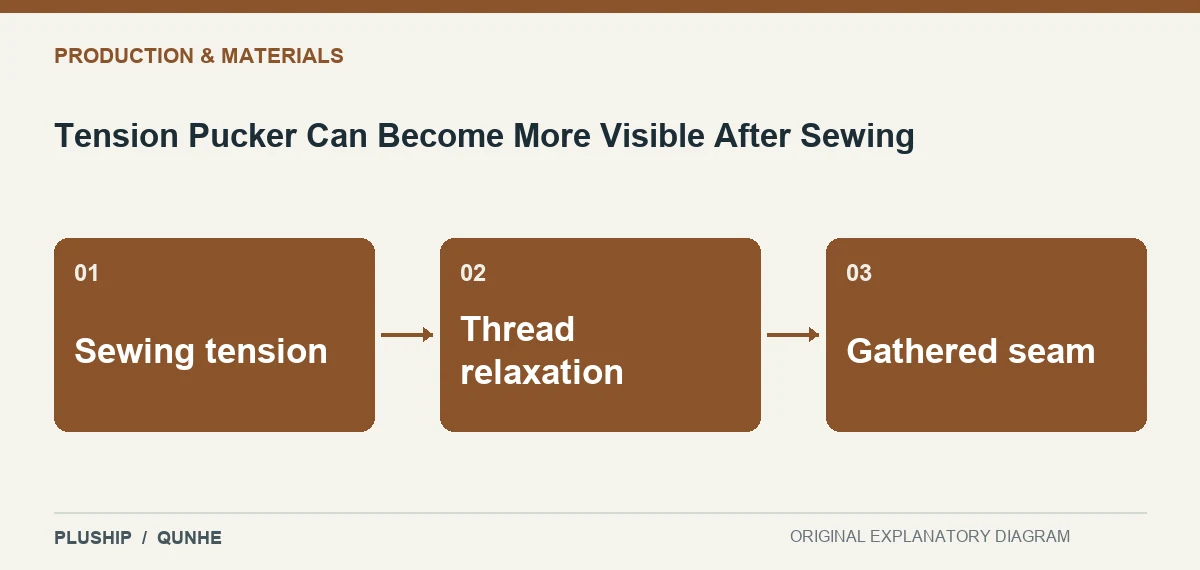
A seam can change appearance after the sewing operation. Preserve when the difference was observed instead of assuming every visible pucker was obvious at the machine.
Coats describes tension pucker as involving stretched thread that relaxes after sewing and can gather the seam. Coats — Eliminating Seam Puckering.
Keep timing in the record
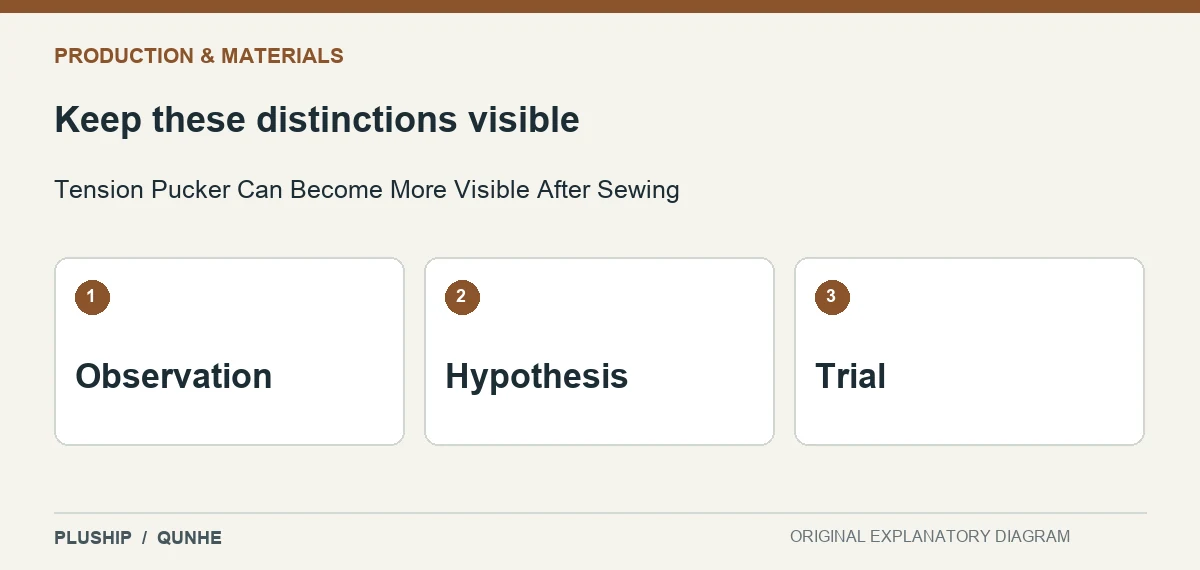
Compare the relevant sample views and note the stage at which the appearance was assessed. Ask the technical reviewer whether the evidence supports the proposed mechanism or whether other causes remain possible. A similar-looking symptom can need a different response.
Use a controlled comparison
Record the actual material and thread combination and the justified trial conditions. Do not copy a generic tension setting into the process. Evaluate the affected result after the appropriate stage rather than judging only the immediate appearance.
The useful outcome is a cause-specific review of the real application. The general mechanism explains why timing matters, but it does not establish the correct setting or acceptance criteria for a particular product.
Source reviewed 25 October 2026. Practical interpretation and original illustrations by PLUSHIP / Qunhe; examples are illustrative.
Related reading
Heat-Related Sewing Problems Need a Cause Investigation
Thread Storage Belongs in the Sewing Quality Discussion