

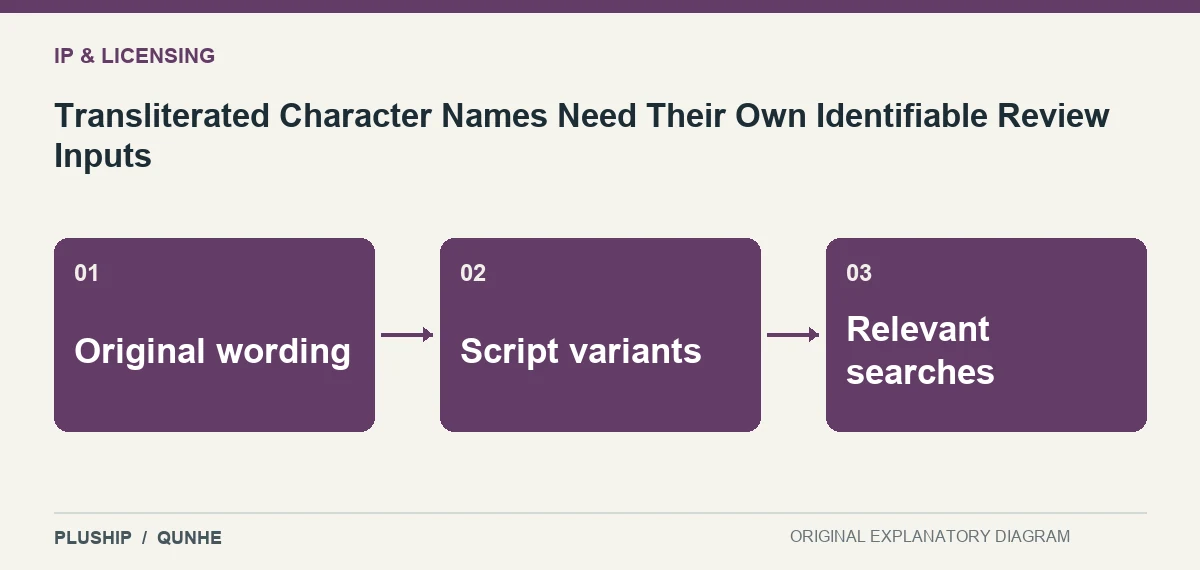
A name used across languages can appear in more than one script or spelling. Keep those actual variants visible instead of assuming one search string represents every market presentation.
WIPO's Global Brand Database provides access to trademark-related information from multiple collections. WIPO — Global Brand Database.
Define the variants being used
For a character brand, record the proposed wording and intended markets. Distinguish a confirmed commercial name from an unapproved translator's suggestion.
Preserve the review boundary
Use appropriate sources and competent interpretation for the actual variants. A translation or transliteration is not itself a rights-clearance conclusion. Keep the search date, input and relevant record identifiers so later naming changes do not silently rely on an assessment of different wording.

Source reviewed 25 October 2026. Interpretation and original diagrams: PLUSHIP / Qunhe. Examples are illustrative.
Related reading
A Font Used in Character Packaging Needs Its Own Licence Review
A Character Voice Needs an Identifiable Permission Basis
Music in a Character Promotion Adds a Separate Asset to Review