
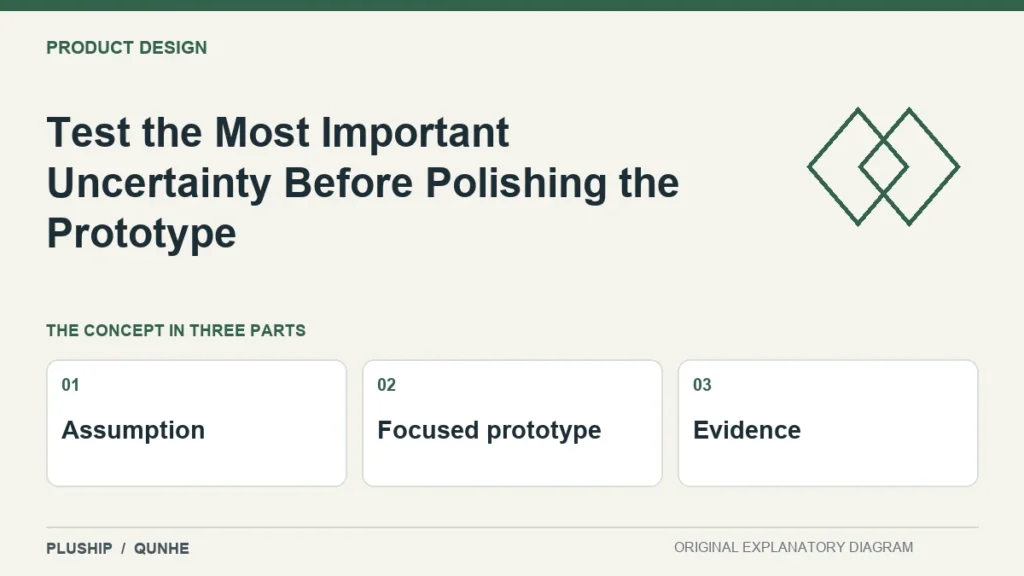
A prototype can answer many small questions while leaving the central one untouched. Identify the uncertainty that could most change the design direction.
Stanford's prototyping and testing methods use tangible exploration to support learning during design. Design Thinking Bootleg.
Prioritise the question
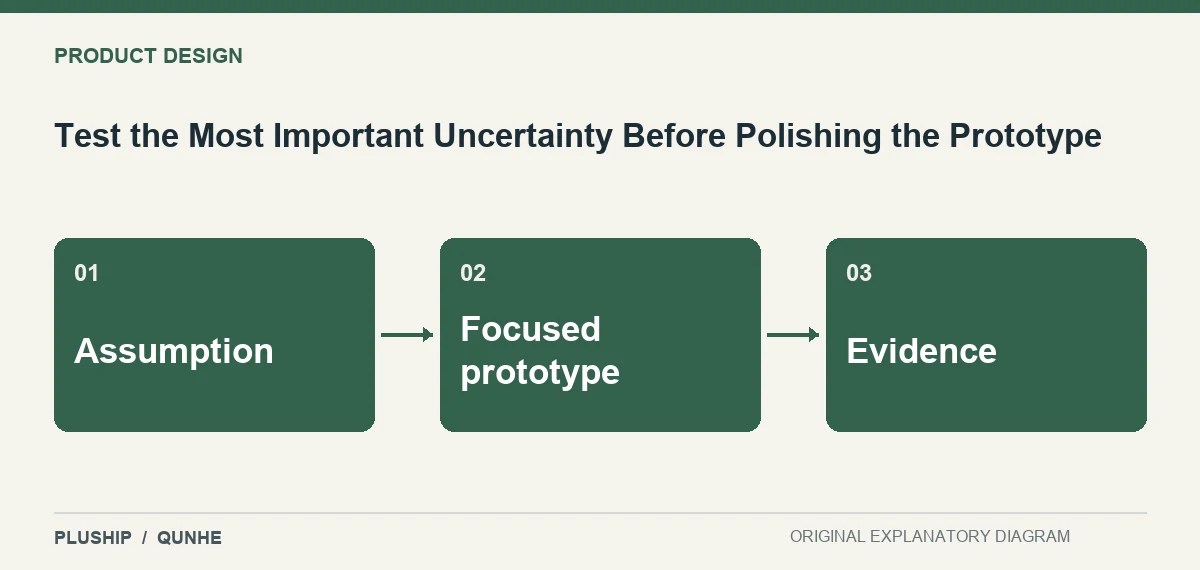
For a hypothetical physical character, the issue might be whether the intended form is recognisable, rather than which background colour looks best. State the question and the evidence needed. Keep attractive finishing details from distracting the review.
Make the test interpretable
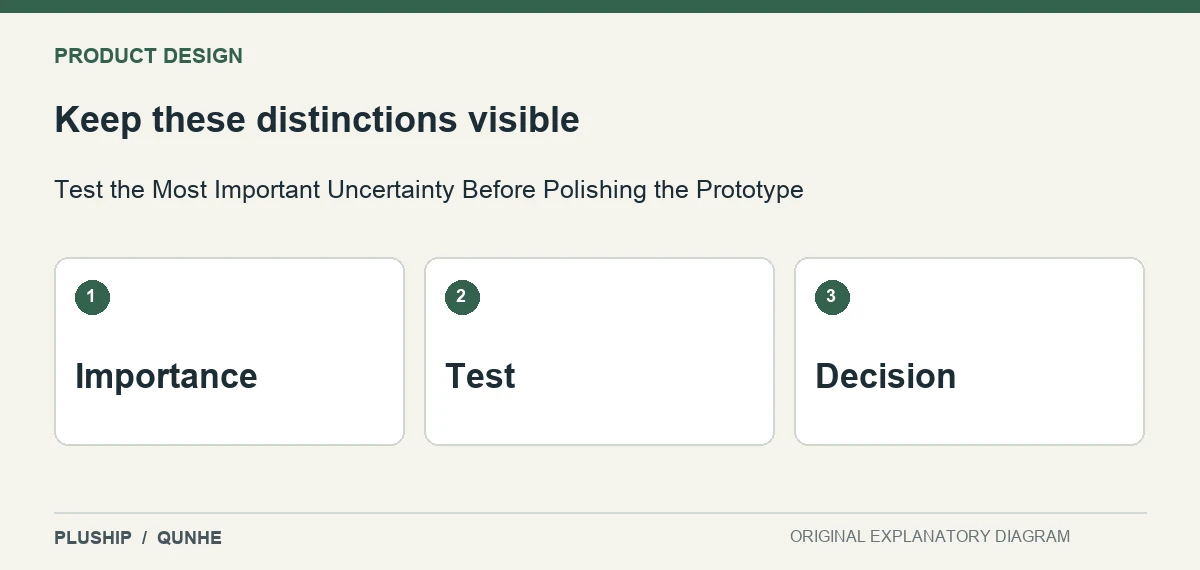
Use a prototype suited to that question and record the conditions. If the exercise cannot address construction or material behaviour, leave those questions open. A useful observation should lead to a specific next action rather than a broad claim that the design is validated.
The practical outcome can be a revised brief, another prototype or a decision to stop a direction. Learning early is valuable even when it means less polishing of the original idea.
Source reviewed 25 October 2026. Practical interpretation and original illustrations by PLUSHIP / Qunhe; examples are illustrative.
Related reading
A Storyboard and a Physical Prototype Test Different Assumptions
Choose Prototype Fidelity from the Question You Need to Answer