
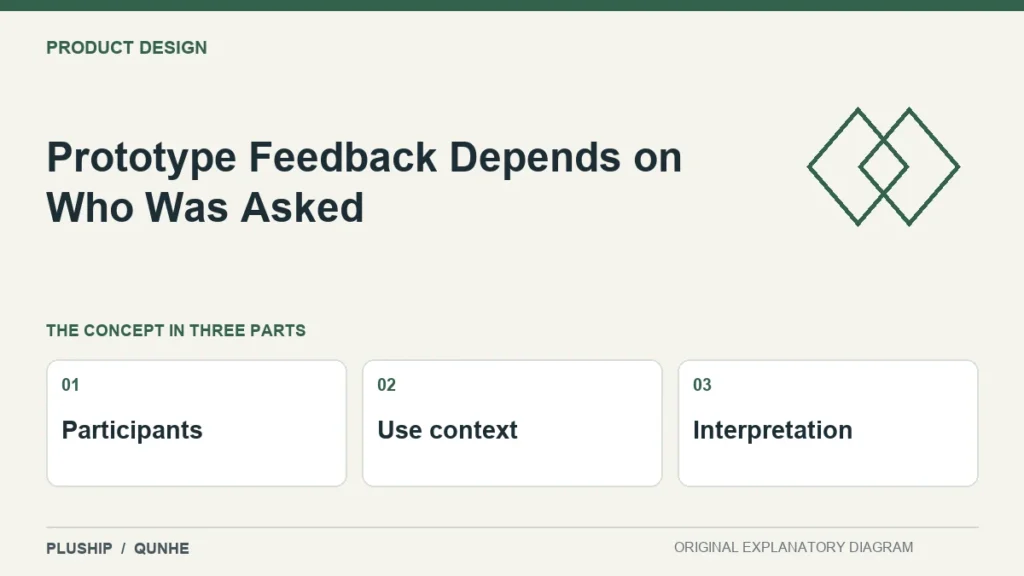
A prototype can receive consistent feedback from a group that does not represent the intended use context. Keep participant selection visible when interpreting the result.
IDEO.org's human-centred methods place learning from relevant people within the design process. Methods.
Describe the feedback source
Record who took part in broad, appropriate terms, how they encountered the proposal and what question they answered. Avoid inferring sensitive traits or making a market-wide claim from convenience feedback. The point is to understand the evidence's scope.
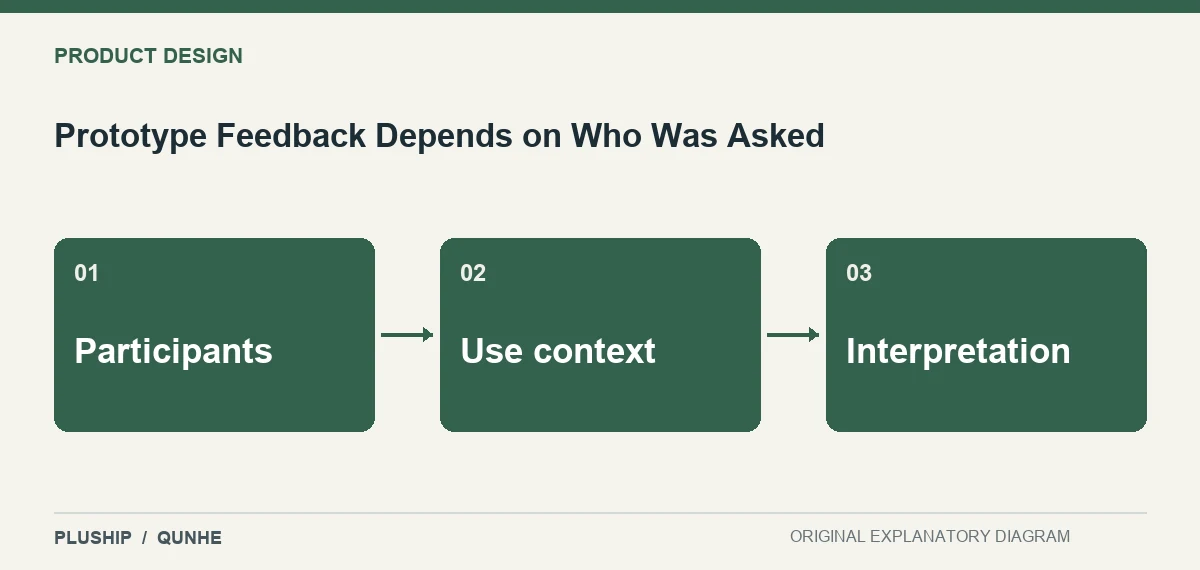
Look for the unanswered question
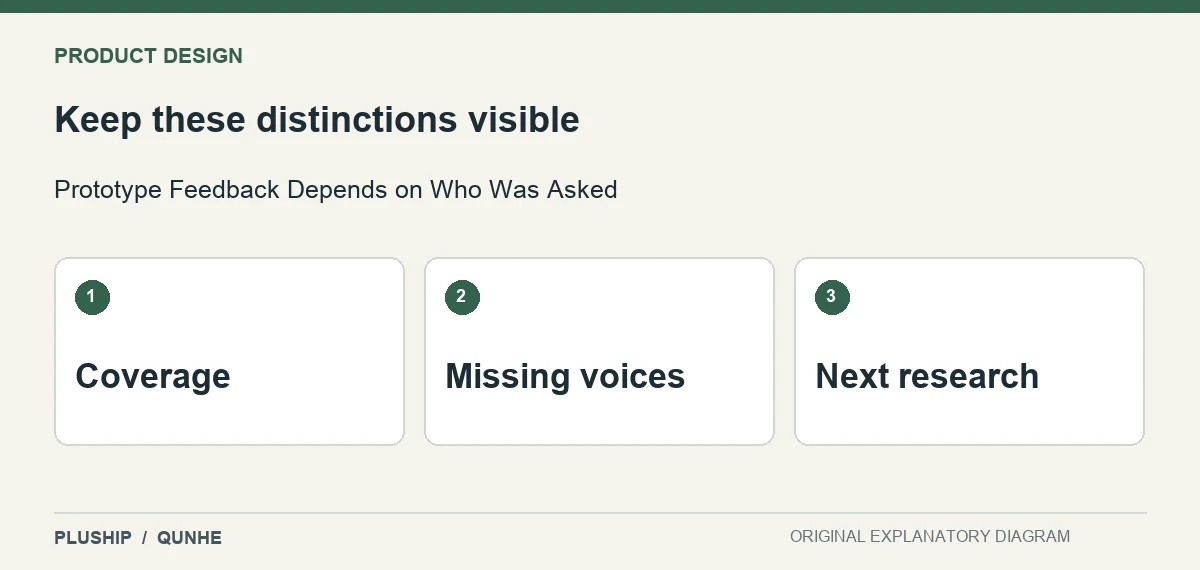
If the product is intended for a different context, decide what further research is needed. Do not discard a useful observation simply because the sample is limited, but do not let it settle a question it never addressed.
A good review summary names both the finding and its boundary. It helps the team choose the next study or design change instead of turning a small session into a promotional statistic.
Source reviewed 25 October 2026. Practical interpretation and original illustrations by PLUSHIP / Qunhe; examples are illustrative.
Related reading
A Storyboard and a Physical Prototype Test Different Assumptions
Choose Prototype Fidelity from the Question You Need to Answer