
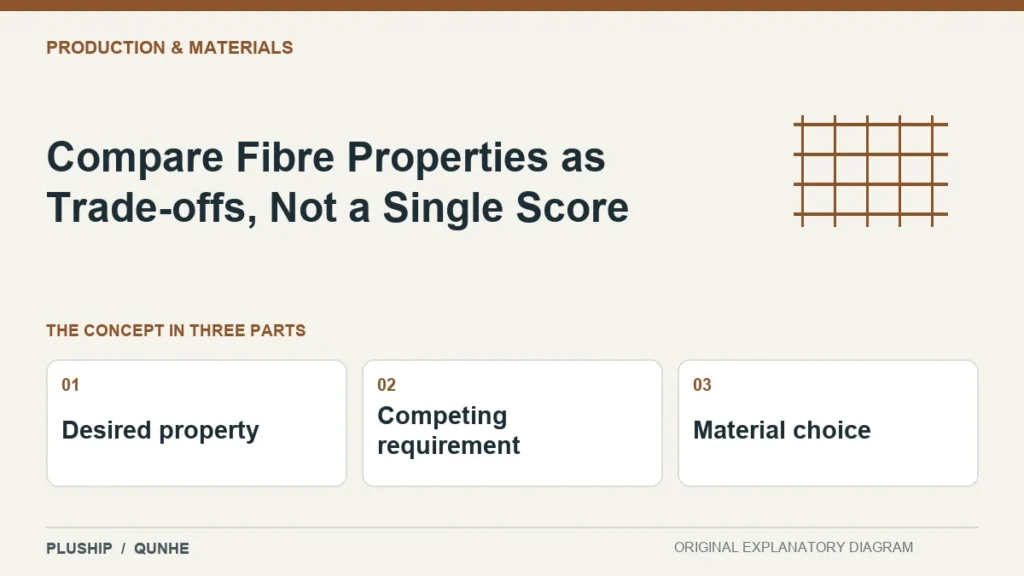
Softness is only one part of a textile decision. A material proposal becomes more useful when the team can see which other properties must be preserved.
Coats describes a range of physical and performance characteristics associated with textile fibres. Coats — Know About Textile Fibres.
Choose the relevant comparison
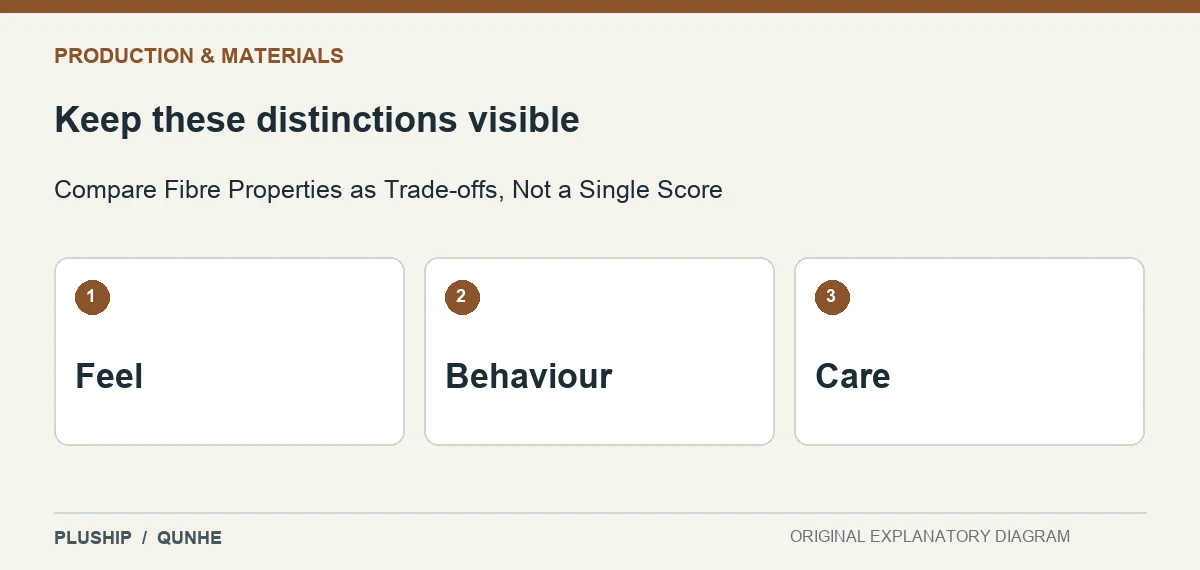
For the proposed item, identify the properties that affect design, use and care. Compare available evidence for those properties rather than ranking materials with one general quality label. Missing information should remain visible.

Discuss the compromise
An option may improve one characteristic while changing another. Ask which requirement takes priority and how the assembled product will be evaluated. Do not assume that a fibre description resolves every property of a finished textile.
Keep the selection rationale short and specific. A later designer or buyer needs to understand why a material was chosen, especially when a visually similar alternative enters the conversation.
Source reviewed 25 October 2026. Practical interpretation and original illustrations by PLUSHIP / Qunhe; examples are illustrative.
Related reading
Thread Elongation and Elastic Recovery Are Different Properties
The Needle and Thread Path Need to Work as a Combination
A Corespun Description Does Not Replace a Complete Thread Specification