
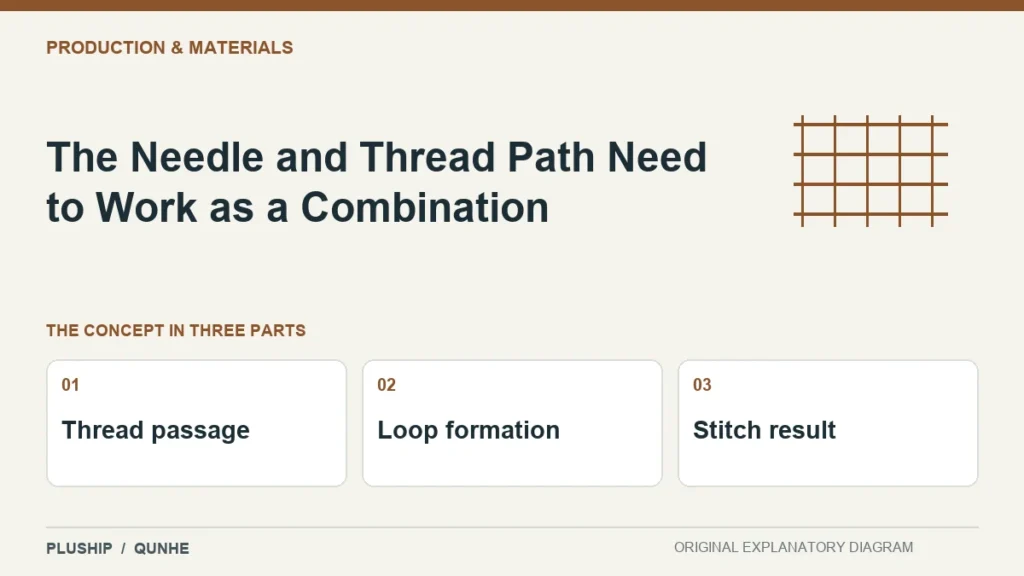
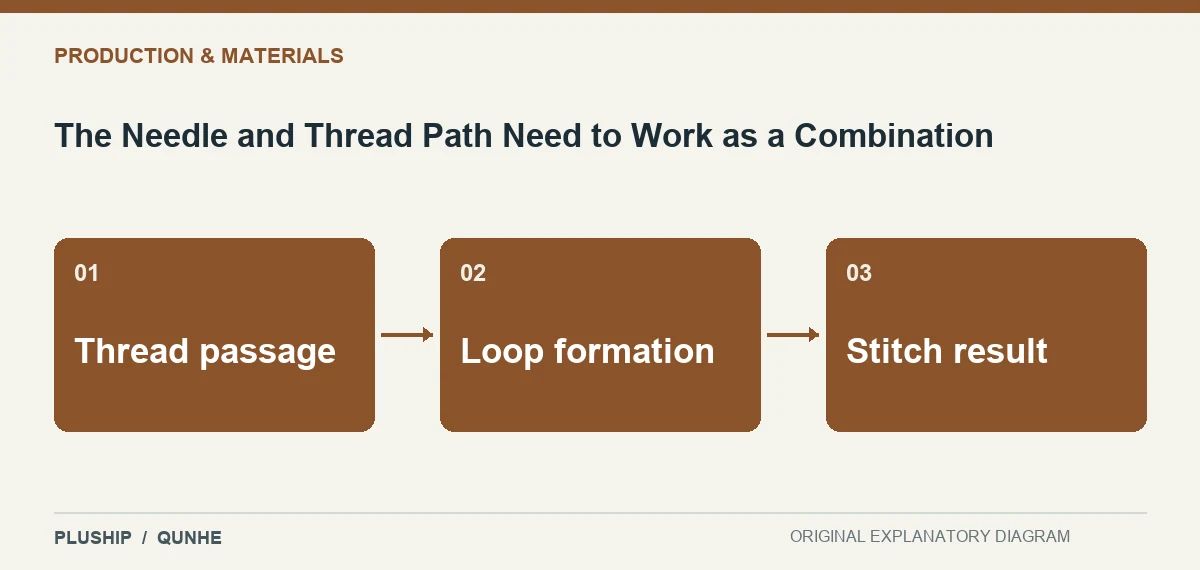
A sewing issue may arise from the relationship between components rather than a single bad component. Keep the needle and thread proposal connected in the investigation.
Coats describes needle functions that include carrying thread through material and supporting stitch formation. Coats — All About Needles.
Identify the combination
Record the actual needle, thread and material references. Ask the technical reviewer to examine the relevant path and operating conditions. Do not infer a compatible combination because each component performed well in a separate application.
Preserve the observed failure
Describe whether the concern involves breaks, inconsistent formation or another actual symptom. Use the evidence to guide a controlled technical review. A speculative explanation should remain a hypothesis until the appropriate check supports it.
After a change, compare the intended result and any affected areas. This makes the outcome reusable and avoids a cycle in which several parts are changed at once and nobody knows which change addressed the issue.
Source reviewed 25 October 2026. Practical interpretation and original illustrations by PLUSHIP / Qunhe; examples are illustrative.
Related reading
Why Thread Consumption Changes With Construction
Lockstitch and Chainstitch Use Different Thread Formations
Thread Elongation and Elastic Recovery Are Different Properties