
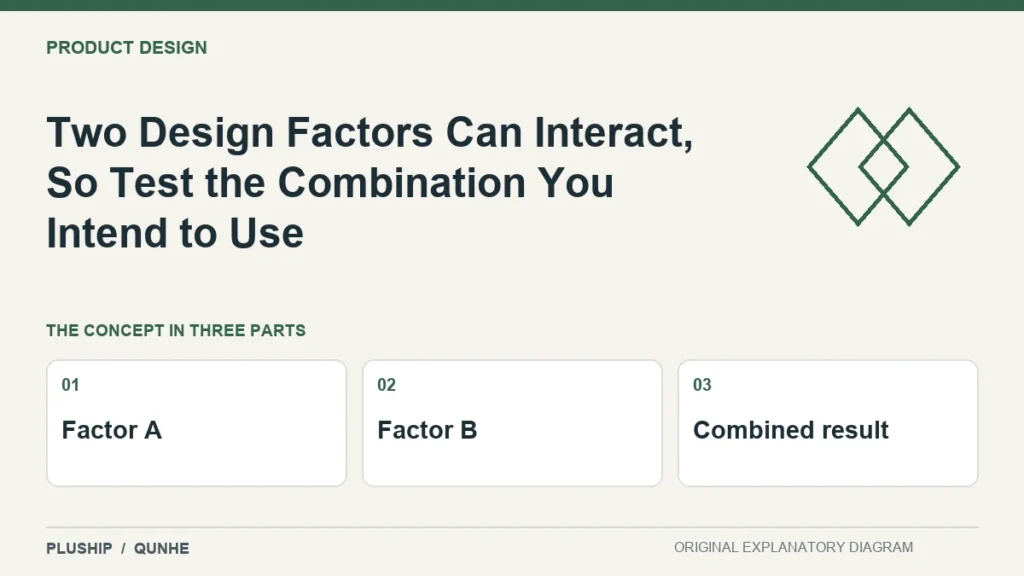
A material choice and construction choice may not affect a product independently. Be cautious about combining the preferred result from two unrelated tests.
ASQ's design-of-experiments material addresses investigating how factors relate to observed responses. ASQ — design of experiments.
State the proposed combination
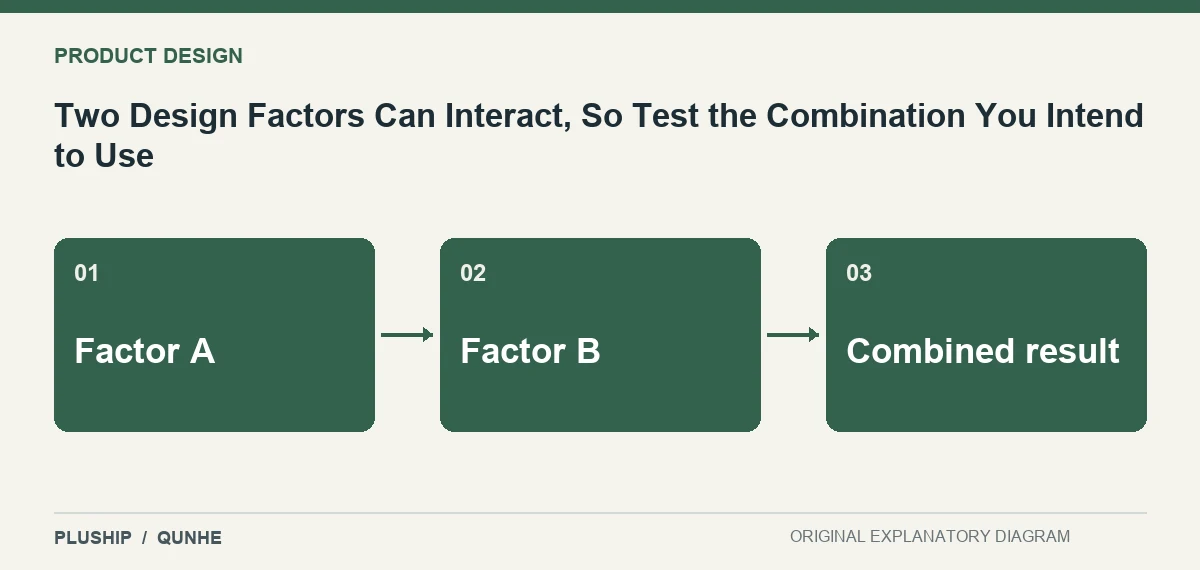
If a team selects a material from one review and a join from another, identify the combination as a new proposal where appropriate. Ask what evidence is needed to evaluate it. Do not assume the two favourable findings simply add together.
Preserve the study conditions
Keep the samples, method and response definition attached to each result. A different setup may explain an apparent contradiction. Seek a suitable experimental plan when the interaction matters to the decision rather than improvising a universal rule.
The design discussion should distinguish what was actually tested from what is inferred. That distinction gives the team a clear reason for the next trial without dismissing useful earlier work.
Source reviewed 25 October 2026. Practical interpretation and original illustrations by PLUSHIP / Qunhe; examples are illustrative.
Related reading
Use Design FMEA to Discuss Failure Before It Happens
A Storyboard and a Physical Prototype Test Different Assumptions
Basic Expectations and Delighters Need Different Design Attention