
A colour-difference value can support a review without making the decision automatically. First establish what was measured and how the result relates to the intended appearance.
Coats' numerical-colour guidance discusses both instrumental measurement and visual assessment in colour evaluation. Coats — Colouring By Numbers.
Compare the same question
Two reported values may come from different samples or measurement conditions. Ask the technical reviewer to explain the basis before treating them as comparable. A smaller-looking number should not be used to settle a disagreement the measurement was not designed to answer.
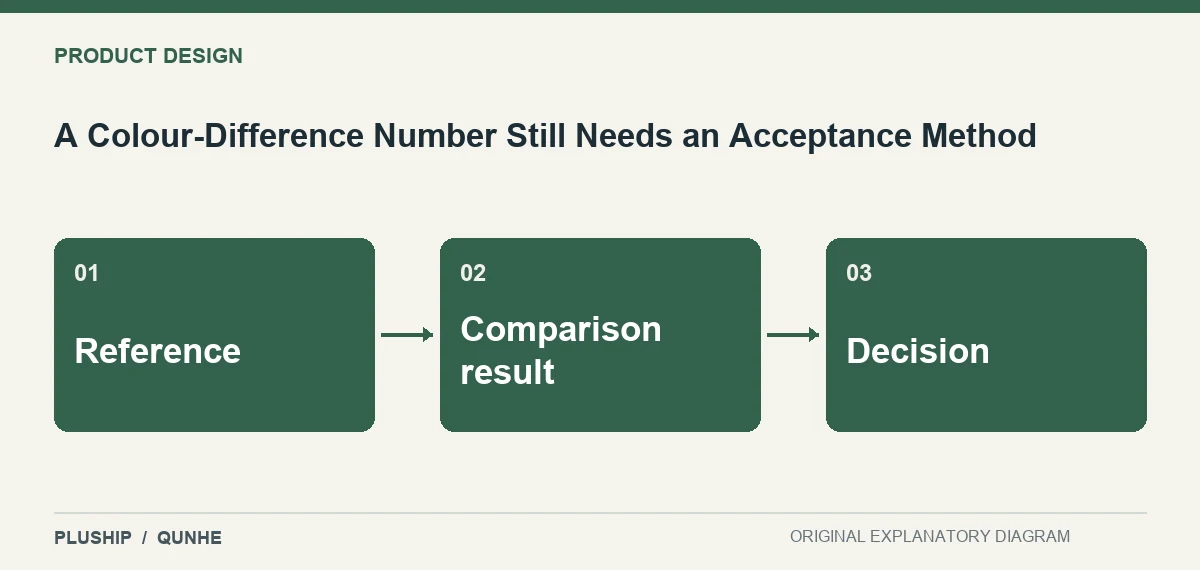
Agree what acceptance means
Define the physical reference, viewing conditions and project-specific review method. Do not borrow a universal tolerance from an unrelated material. If appearance remains inconsistent across relevant conditions, record the unresolved question rather than hiding it behind the numeric result.
The result should connect measurement with a practical decision. Clear conditions and traceable references matter more than displaying additional decimal places in a design report.

Source reviewed 25 October 2026. Practical interpretation and original illustrations by PLUSHIP / Qunhe; examples are illustrative.
Related reading
Colour Coordinates Add Precision Only When the Method Is Clear
A Technical Diagram Needs Labels as Well as Colour