
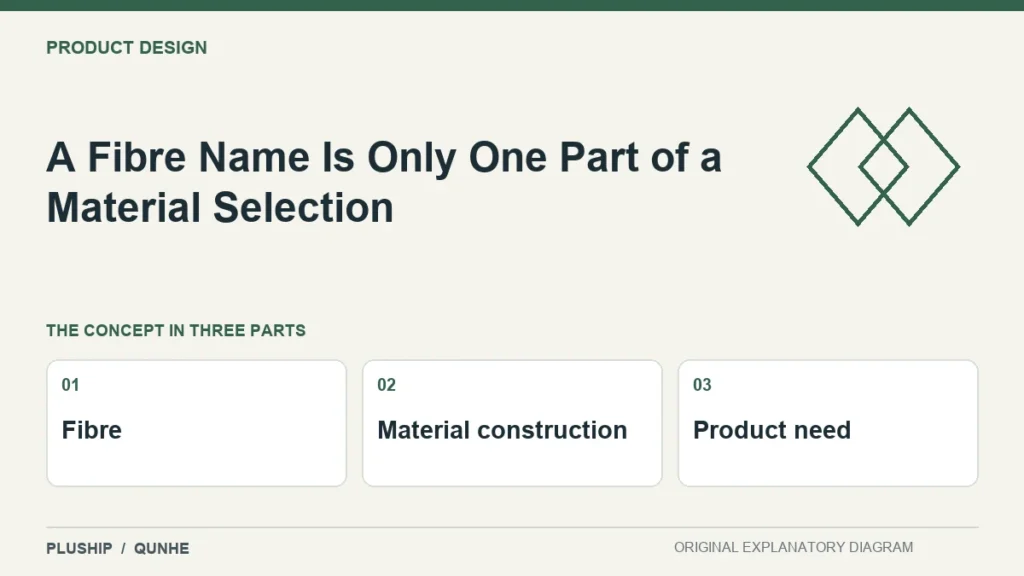
Two materials described with the same fibre name may not behave the same way in a product. Start with the properties the design needs, then request the information relevant to those properties.
Coats' textile-fibre guidance describes fibre classifications and physical properties relevant to textile applications. Coats — Know About Textile Fibres.
Write the functional questions
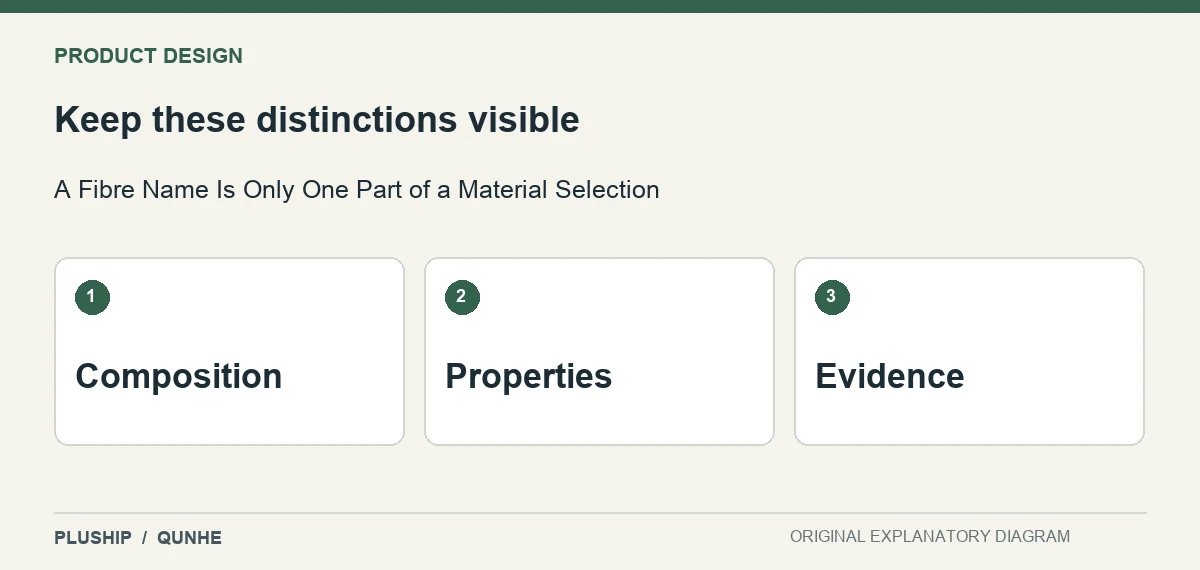
A soft-product brief may need evidence about appearance, handling and the proposed construction. Name those needs separately. Do not replace them with a broad instruction such as “use the best polyester”, which leaves the real decision unexplained.
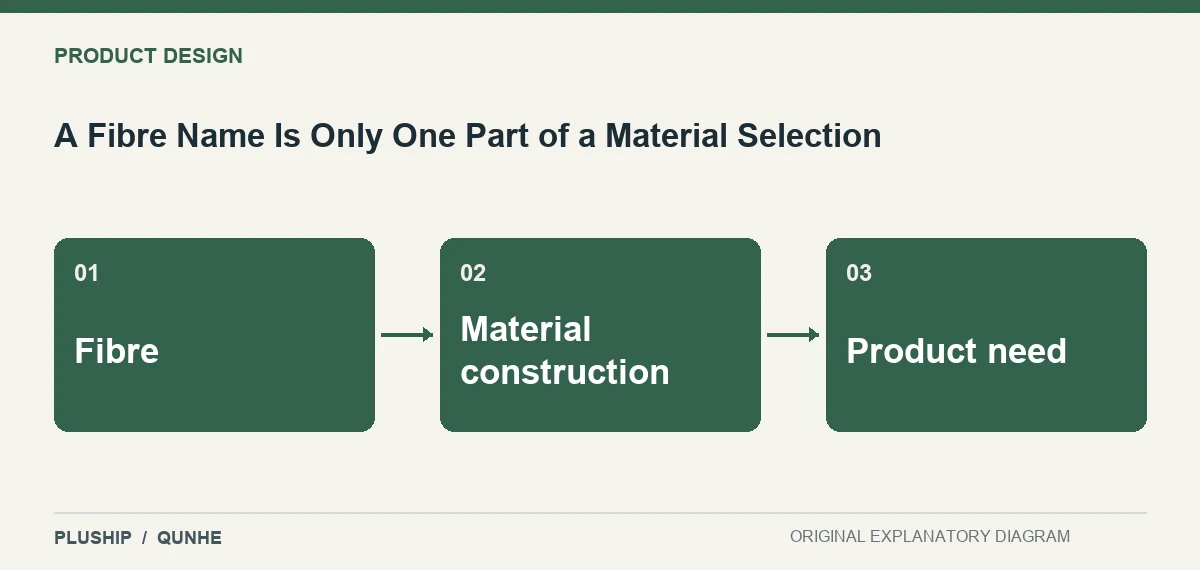
Compare actual proposals
Ask for the specific material reference and relevant supporting information. Keep the offered material linked to the sample used in review. A fabric-looking render or a generic fibre description cannot establish the performance of the proposed finished product.
Use the comparison to choose or narrow a material proposal. The value is a reasoned relationship between properties and intended use, without implying that one fibre is universally preferable for every plush design.
Source reviewed 25 October 2026. Practical interpretation and original illustrations by PLUSHIP / Qunhe; examples are illustrative.
Related reading
A Material Trial Needs an Identifiable Baseline
Circular Design Starts Beyond the Individual Material
Colour Coordinates Add Precision Only When the Method Is Clear