
A care instruction applies to an assembled item. Selecting it from the main fabric alone can overlook thread, decoration and other included components.
Coats' care-label guidance discusses care processes and the compatibility of textile components with those processes. Coats — Care Labels.
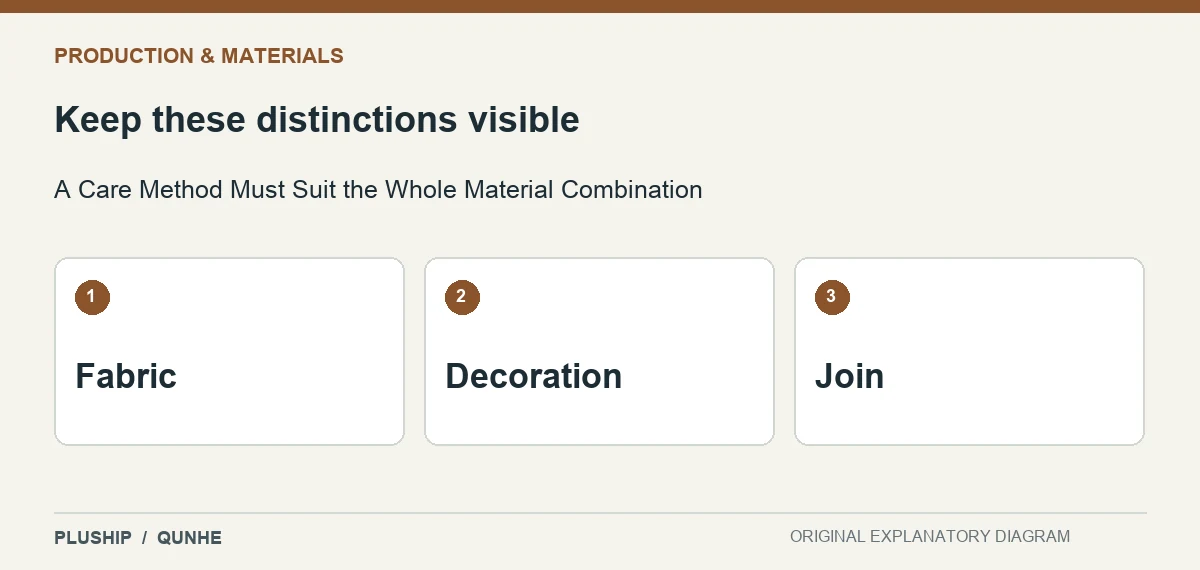
List the included components
Identify the materials and decorations whose appearance or function could change during the proposed care process. Where component information is missing, leave the care decision open rather than completing the label from a familiar product.
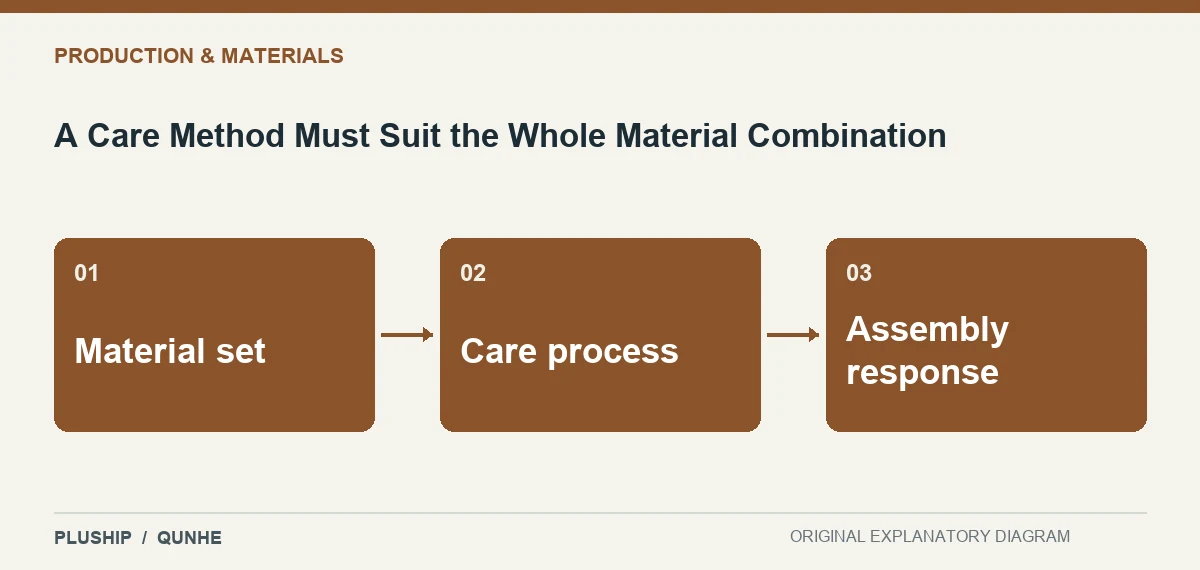
Evaluate the relevant assembly
Ask what evidence supports the proposed method for this construction. A material supplier's information may help define the review, but it should not silently become a finished-product claim. Record any restrictions that follow from the actual evaluation.
For a character product, consider whether care affects recognition as well as general appearance. A distorted embroidered face or changed surface can matter even when the item remains physically intact.
Source reviewed 25 October 2026. Practical interpretation and original illustrations by PLUSHIP / Qunhe; examples are illustrative.
Related reading
When Material Displacement Contributes to Seam Puckering
The Needle and Thread Path Need to Work as a Combination
Needle-Point Selection Needs the Actual Material in the Trial