
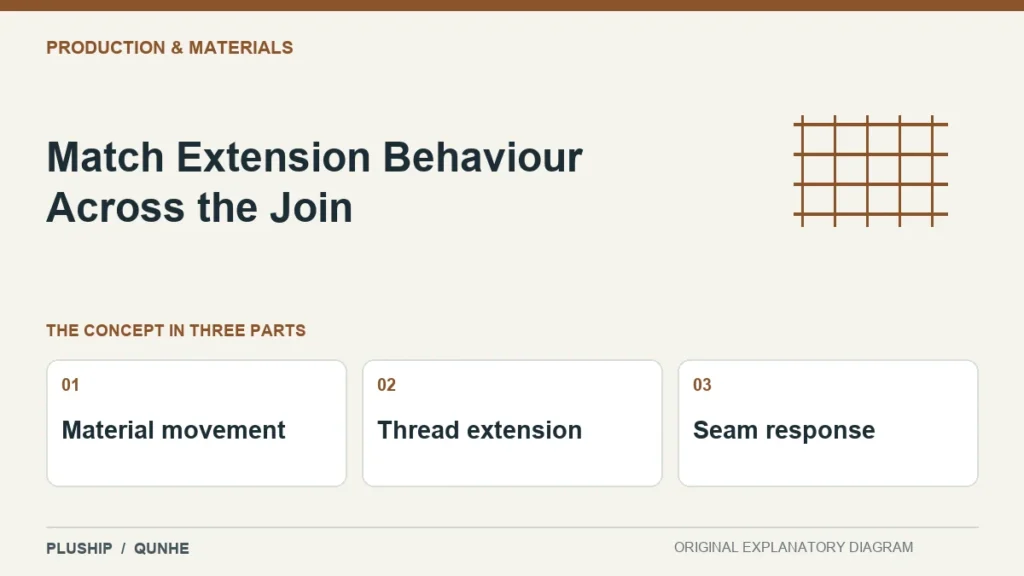
A join must be considered in the movement expected of the assembled product. Looking at thread extension without the surrounding material leaves part of that question unanswered.
Coats explains thread elongation and its relationship to sewing and seam performance. Coats — Thread Elongation.
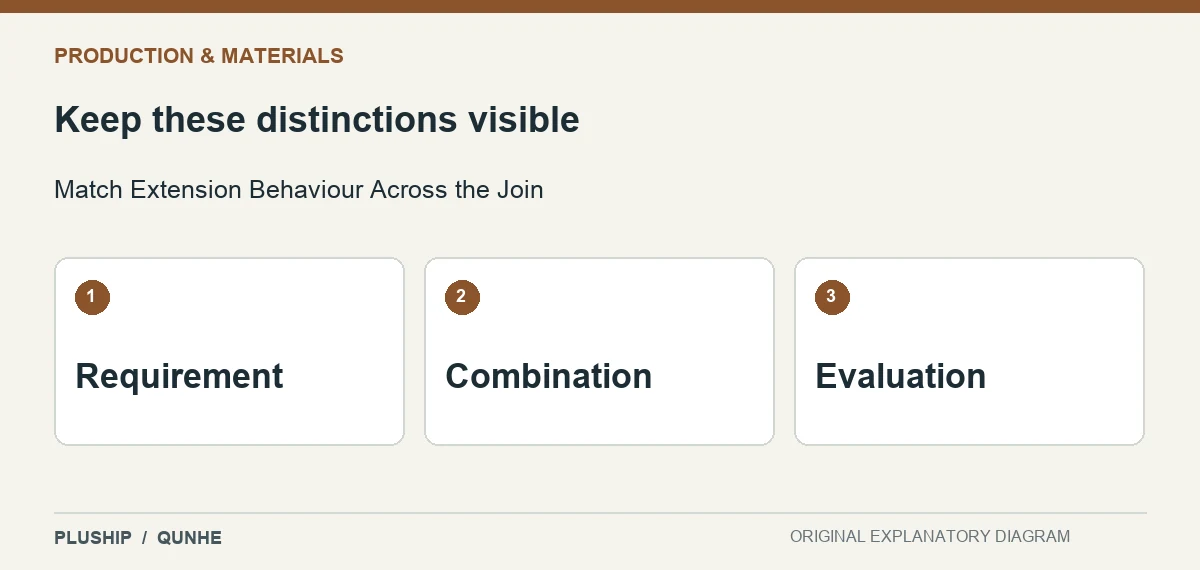
Define the relevant movement
Describe the expected use or evaluation condition rather than asking for the stretchiest thread. The requirement may involve appearance, recovery, strength or a combination. Those outcomes should not be collapsed into one material adjective.
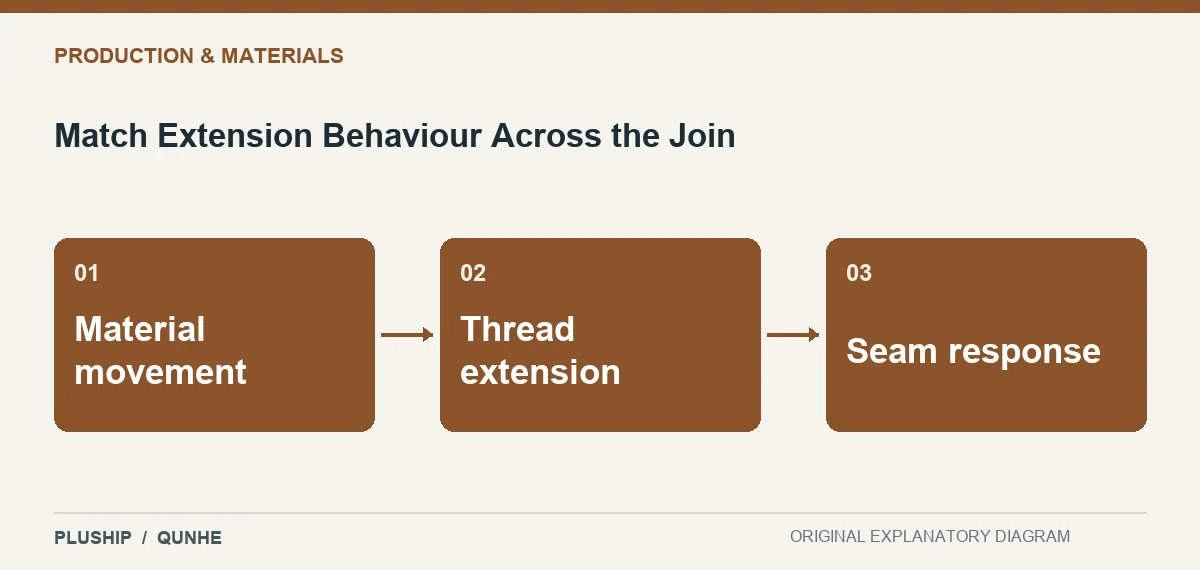
Compare the assembled response
Ask the technical team to examine the proposed construction with its actual material layers. Record whether the join and surrounding material behave as intended together. A change that helps one feature may alter another.
This discussion is most useful before a material substitution is approved. Preserve the reason for the chosen combination so a later buyer does not replace an important performance condition with a superficially similar specification.
Source reviewed 25 October 2026. Practical interpretation and original illustrations by PLUSHIP / Qunhe; examples are illustrative.
Related reading
An Edge Finish and an Assembly Join May Have Different Jobs
A Seam and a Stitch Describe Different Parts of a Sewn Product