
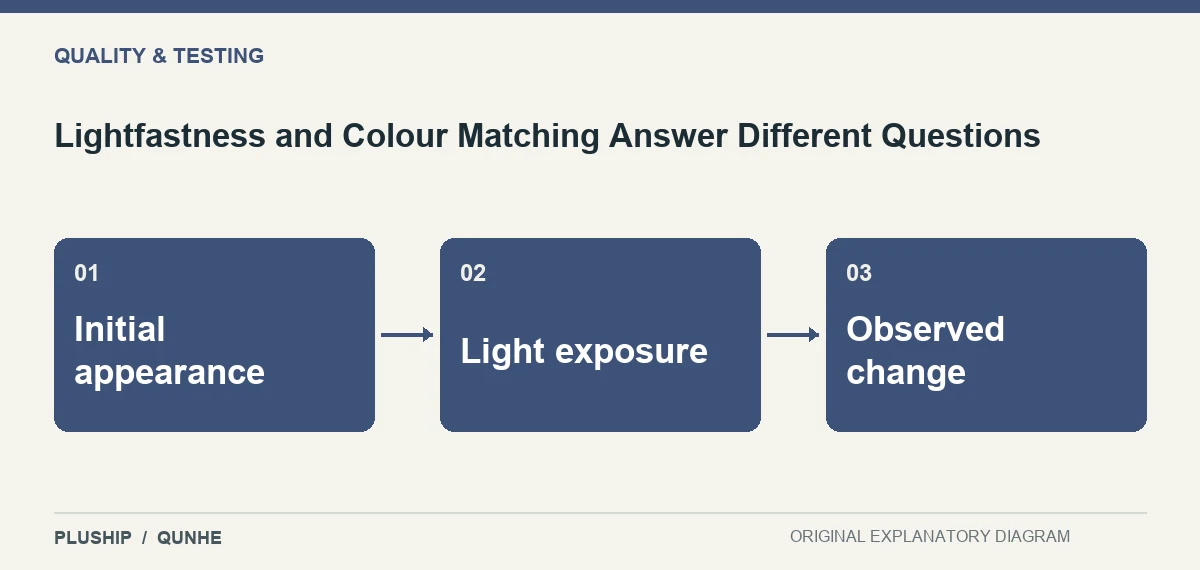
A material can match the approved colour initially while responding differently to light over time. Initial colour approval and light-exposure evaluation should remain separate decisions.
Intertek lists light exposure among the conditions considered in colourfastness testing. Colorfastness Testing.
Identify the expected exposure
Explain the intended presentation and use to the responsible testing specialist. A display near a window and a stored item may raise different questions. Avoid inventing a service-life promise from a short description of a test.
Preserve the evidence boundary
Read the method, specimen identity and reported result. Do not confuse a change after exposure with the separate problem of two materials matching under one light but not another. Those observations may require different investigations.
For a character range, the practical question is whether appearance remains acceptable under the defined requirements. A general colourfastness statement is less useful than evidence addressing the relevant exposure and material combination.
Source reviewed 25 October 2026. Practical interpretation and original illustrations by PLUSHIP / Qunhe; examples are illustrative.
Related reading
Quality Assurance and Quality Control Address Different Questions
Quality Cost Includes More Than Rejected Products