
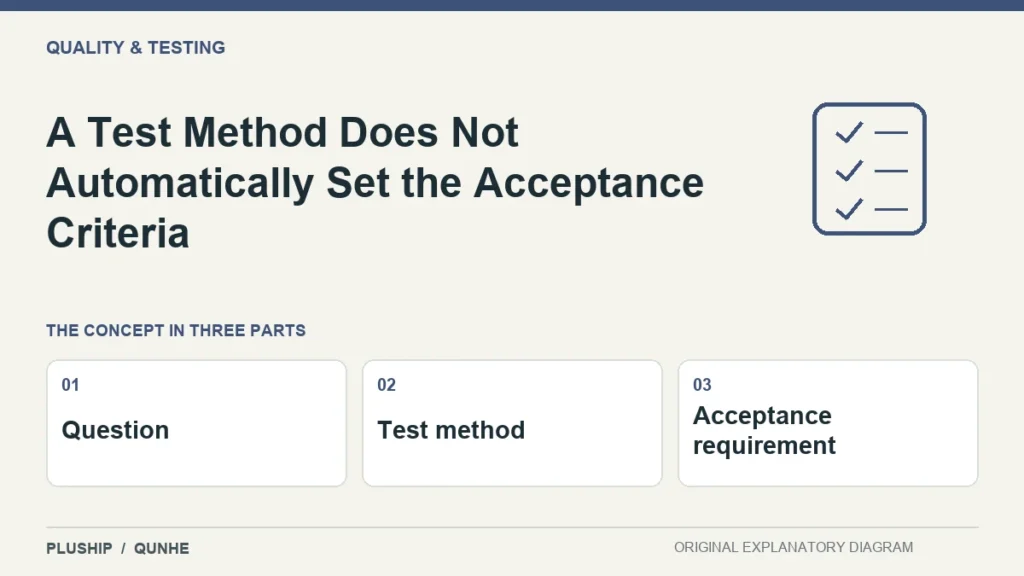
Naming a test method explains how an evaluation is performed. The team must still identify what result is required for the particular product or claim.
Intertek describes multiple textile colourfastness methods addressing different exposure conditions. Colorfastness Testing.
Separate the three parts
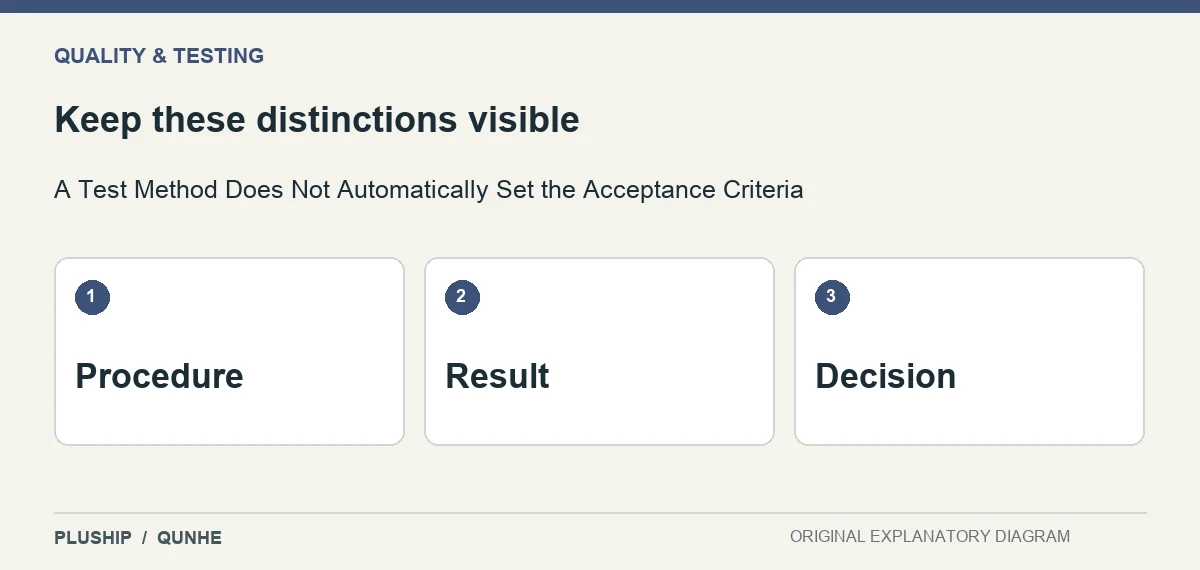
Record the method, the observed result and the applicable acceptance criteria. If one is missing, the conclusion may be incomplete. A report containing a number is not automatically a passing report, and a familiar method name does not supply a universal threshold.
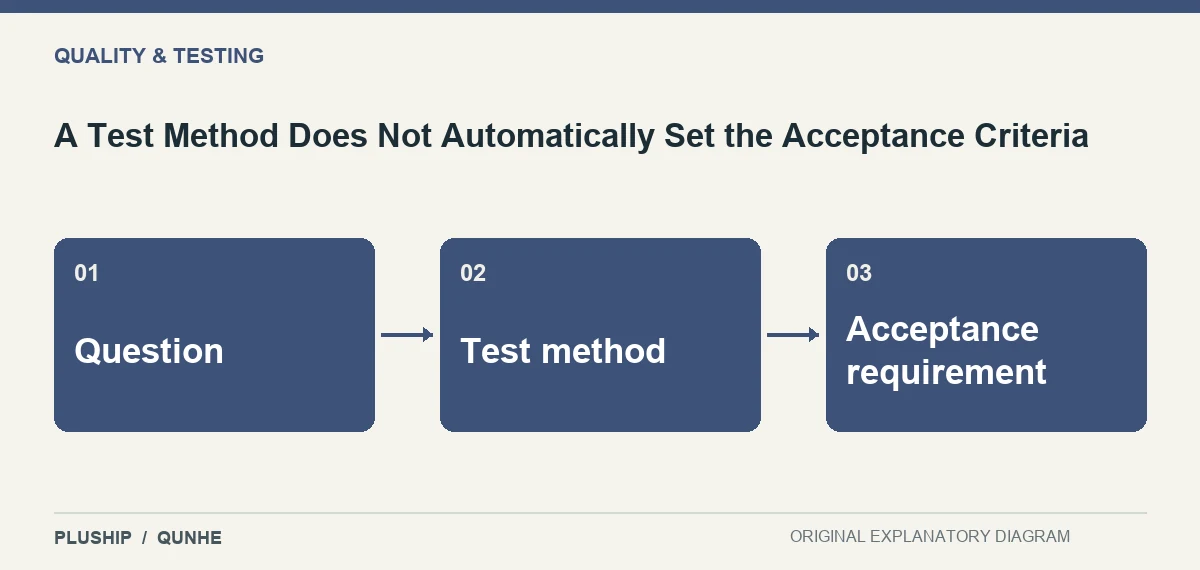
Resolve the requirement before testing
Ask the responsible parties to confirm the relevant product, market and contractual requirements. This avoids selecting a favourable interpretation only after the result is known. Where requirements are unresolved, state that uncertainty directly.
The same discipline helps non-specialist buyers read technical evidence. They can ask what was done, what happened and why the result supports the decision without pretending that every test shares the same passing rule.
Source reviewed 25 October 2026. Practical interpretation and original illustrations by PLUSHIP / Qunhe; examples are illustrative.
Related reading
Acceptance Sampling Does Not Inspect Every Unit
FMEA Ratings Support Prioritisation; They Are Not Test Results
A Fishbone Diagram Organises Possible Causes, Not Proven Causes