
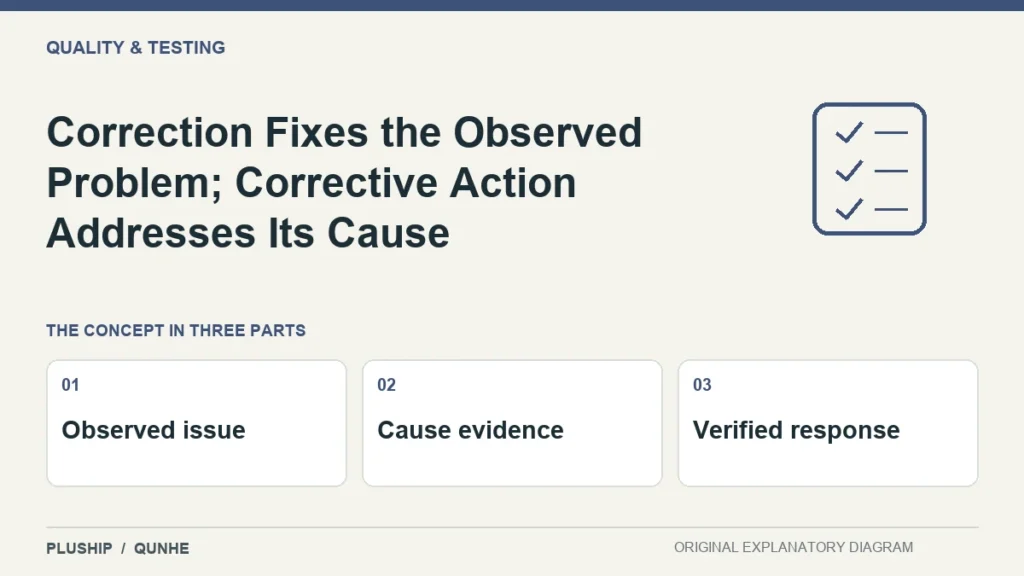
Repairing an affected item can resolve the immediate problem without explaining why it happened. Keep that response separate from the work intended to prevent recurrence.
ASQ describes root cause analysis as a process for identifying underlying causes of problems. ASQ — root cause analysis.
Record the immediate disposition
Identify what happened to the affected items and which population was reviewed. This is necessary operational information, but it does not establish the cause. Do not close the investigation merely because a replacement or repair was completed.
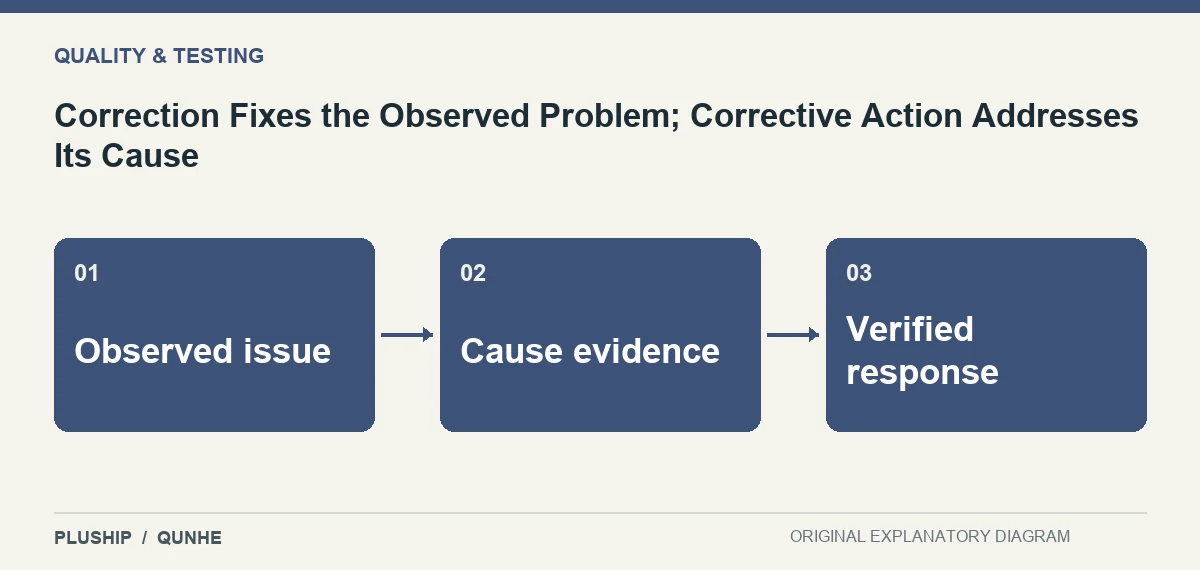
Test the explanation
Connect the proposed cause to evidence and define a response that addresses it. Then check whether the response works under relevant conditions. If the problem recurs, revisit the explanation rather than repeatedly labelling the same repair corrective action.
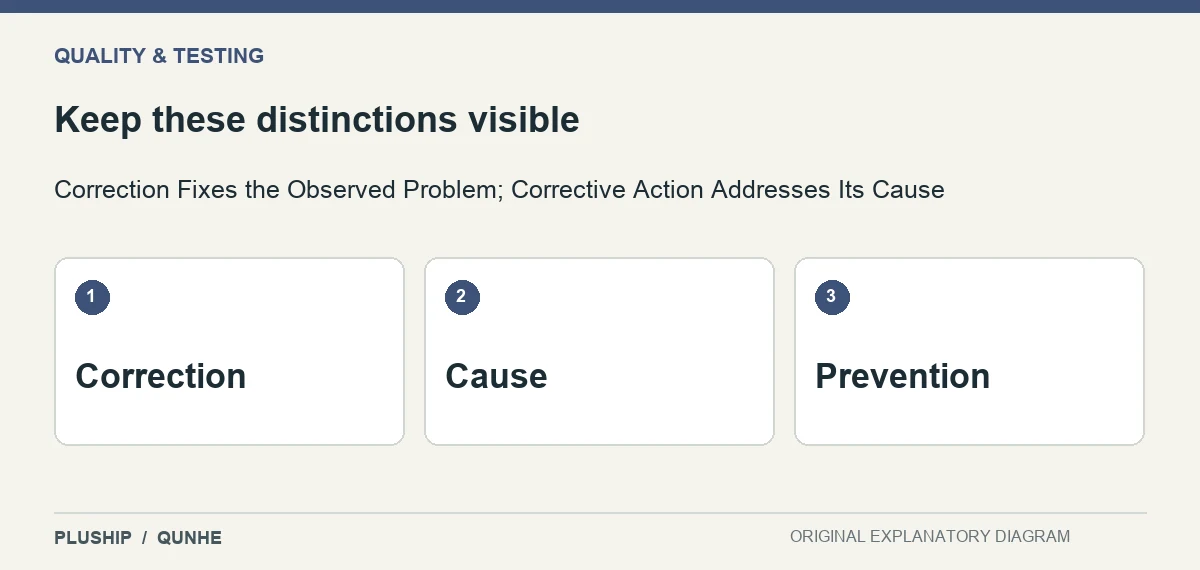
A clear record lets a buyer distinguish containment, correction and longer-term improvement. It also makes it easier to see what remains unresolved after the immediate delivery issue has been handled.
Source reviewed 25 October 2026. Practical interpretation and original illustrations by PLUSHIP / Qunhe; examples are illustrative.
Related reading
Containment in 8D Is Different From Permanent Corrective Action
An A3 Report Should Show the Reasoning Behind the Action