
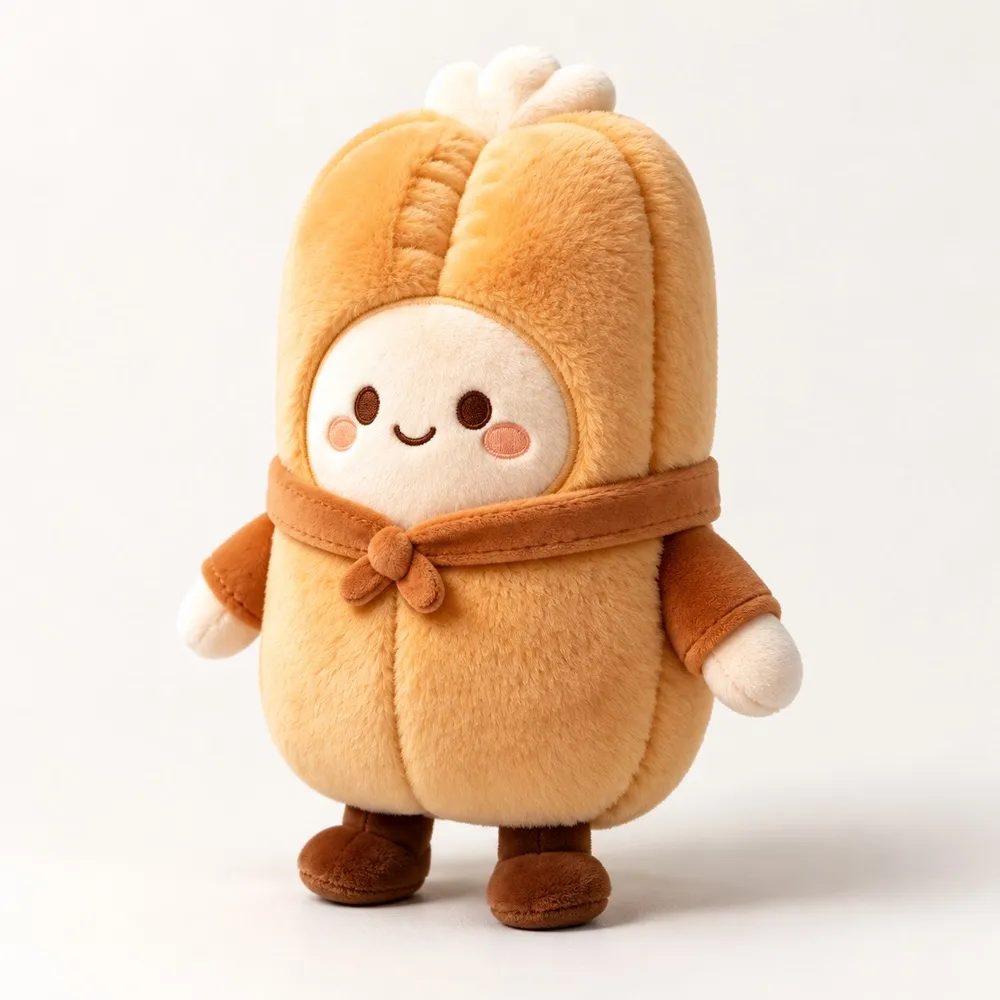
A useful hangtag makes the character easy to identify and gives the buyer the verified information needed for the intended product. Keep the short story distinct from factual fields. A playful name should not be asked to carry dimensions, materials or care instructions.
Give the character one clear introduction
For the Brown Bow Pastry Doll, the bow is a useful identifying detail. A short line about its bakery-inspired appearance can help a customer choose the right design. Avoid inventing an origin story, award or manufacturing claim to make the tag feel complete.
Source the factual fields
Request the actual product specifications, care information and intended-market labelling requirements through the supplier's appropriate process. This article is about organising copy, not prescribing mandatory legal wording. Requirements should be checked for the particular product and destination.
Keep unconfirmed fields out of the print-ready file. If a value changes during sampling, revise the tag proof as well as the online product record.
Review the physical proof
Read the tag at its proposed size. Check spelling, product reference, line breaks and whether the attachment obscures the face or important accessory. A large PDF on a monitor can conceal text that is awkward on the final small tag.
For a multi-design range, verify each reference rather than approving one tag and assuming the others match.
Can the online description be copied directly onto a hangtag?
Usually it needs editing. An online page can explain selection and enquiry details; a small tag has a different purpose and space limit. Keep the key identity and verified fields, then review the actual layout.
Prepare the tag copy alongside the packaging plan, before sending artwork for final confirmation.