
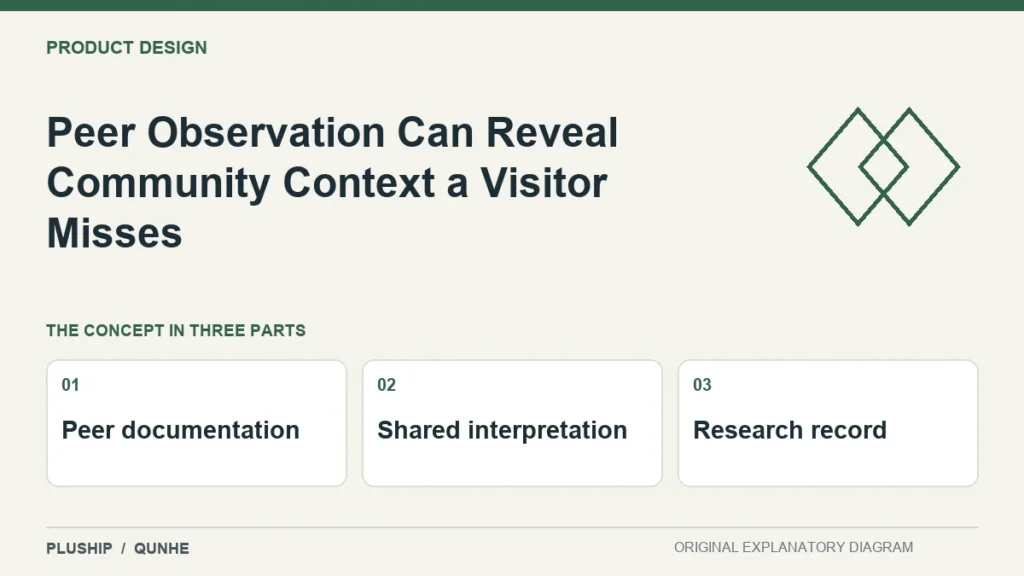
A community member may notice practices that an outside researcher does not recognise. Peer observation can add that perspective, provided the resulting interpretation remains traceable.
IDEO.org describes Peers Observing Peers as learning through people documenting their own communities. IDEO.org Design Kit — Peers Observing Peers.
Agree on the role
For a character-collecting study, define the observation question and appropriate consent boundaries. Familiarity with the community does not remove privacy responsibilities or make every interpretation self-evident.
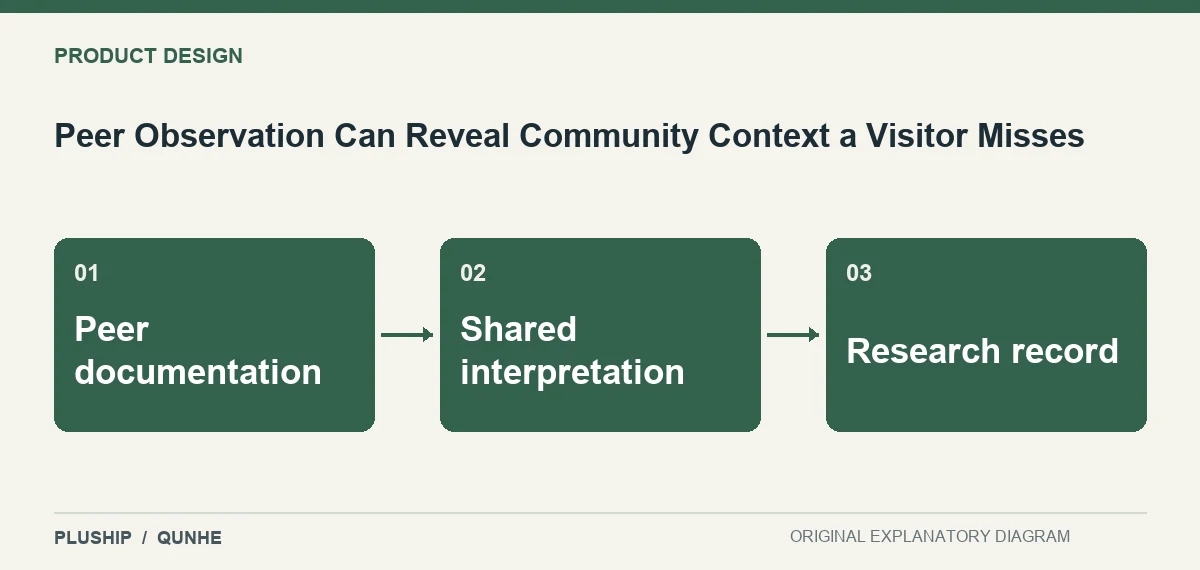
Discuss assumptions
Ask the observer to explain what they noticed and why it matters. Keep direct observation separate from community knowledge and personal interpretation. Compare perspectives rather than replacing one unexamined viewpoint with another. The aim is a richer account of use, not a claim that one observer speaks for every fan.

Source reviewed 25 October 2026. Interpretation and original diagrams: PLUSHIP / Qunhe. Examples are illustrative.
Related reading
A Guided Tour Can Reveal How a Character Will Live in a Space
Resource Flow Research Can Clarify the Context of a Gift Purchase
Unusual Use Cases Can Reveal Constraints Hidden by the Average