
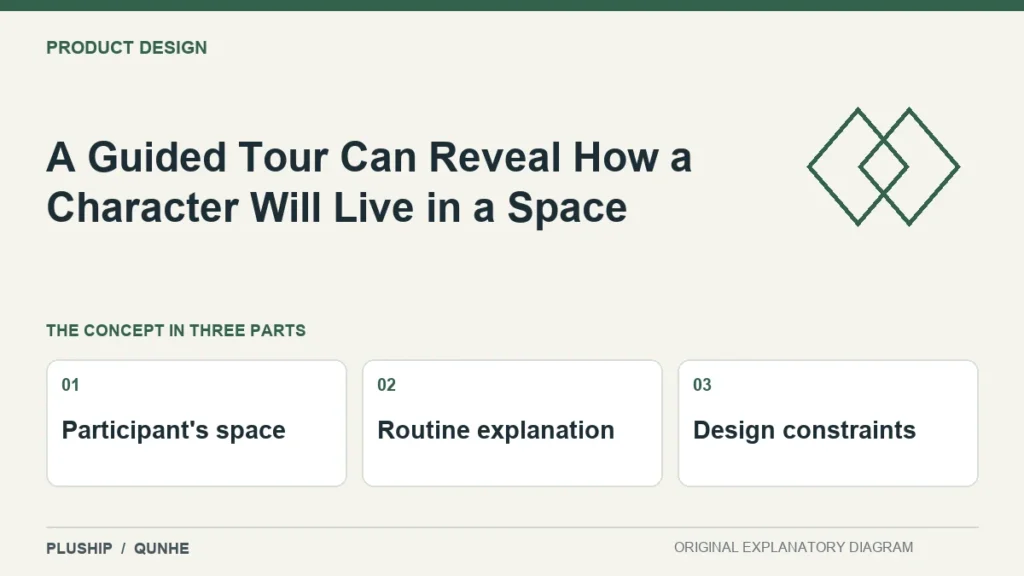
A character intended for display will share space with other possessions and routines. A guided conversation in the relevant setting can uncover constraints that a studio image misses.
IDEO.org describes Guided Tours as a way to learn about people's spaces, routines and habits. IDEO.org Design Kit — Guided Tour.
Let the participant lead
For a desk-character study, ask where an item is kept and why. Obtain permission for access and any photography. Avoid reorganising the setting into a more attractive research picture.

Separate observation from inference
A crowded shelf might suggest a space constraint, but the participant's explanation matters. Record the observed condition and the interpretation separately. Use the findings to investigate fit and interaction, without presenting one person's arrangement as a universal audience preference.

Source reviewed 25 October 2026. Interpretation and original diagrams: PLUSHIP / Qunhe. Examples are illustrative.
Related reading
Map Who Can Influence a Character-Design Decision
A Character Concept Needs a Coherent Delivery Model
Brainstorm Character Interactions Before Listing Accessories