
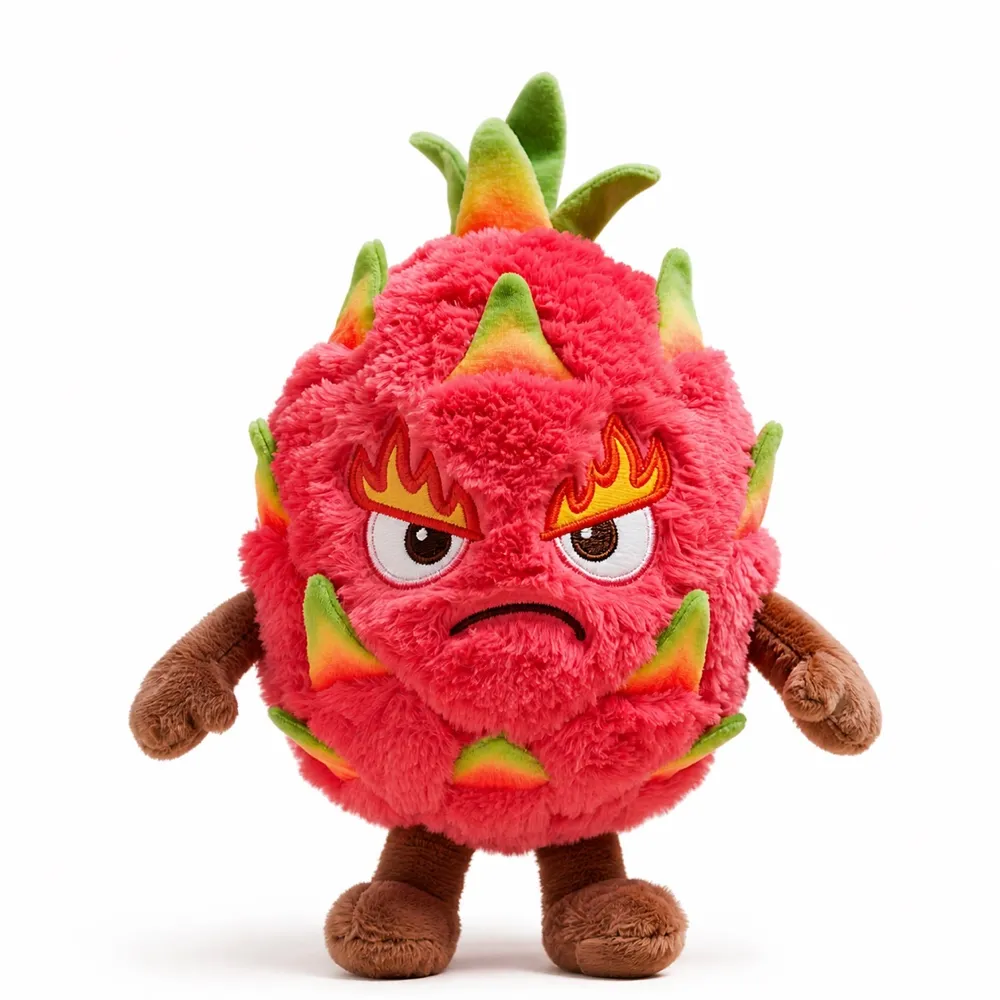
Choose the few features that make the mascot recognisable before requesting a sample. A drawing can contain many details, but not every line has equal importance when the character becomes a three-dimensional object. A short priority list makes sample feedback more focused.
Identify the recognition cues
Common cues include the head outline, eye spacing, a colour block or a distinctive accessory. A whole Dragon Fruit character offers a catalogue example of a fruit outline combined with expression and green accents. For your own mascot, name the features that carry its identity rather than describing it only as cute or friendly.
Use the artwork you are authorised to develop. The selection of a visual reference does not establish permission to reproduce another party's character.
Rank the priorities
For example, a hypothetical brief might prioritise the face proportions, the silhouette of the ears and one body marking. Explain what can be simplified if the sample maker needs to adapt the drawing. Leave room for a construction proposal instead of requiring an unreviewed interpretation of every line.
Use the same priorities in the review
When the sample arrives, assess the three features first. Then check the remaining specification and finishing details. If the identity is wrong, a series of small accessory corrections will not resolve the underlying issue.
Keep a record of the accepted compromises. Otherwise a later reviewer may request the original drawing detail again without understanding why it changed.
Are three priorities a limit on the finished design?
No. They are a way to make the first design discussion clear. The full brief still needs dimensions, materials to discuss, views and other project requirements.
The brand-to-mascot questions can help prepare the shortlist of recognition cues.