

A composition statement for one textile should not silently become the composition of the entire finished character. Identify which component the percentage actually describes.
Coats describes textile fibres and blends as relevant material classifications. Coats — Know About Textile Fibres.
Define what is included
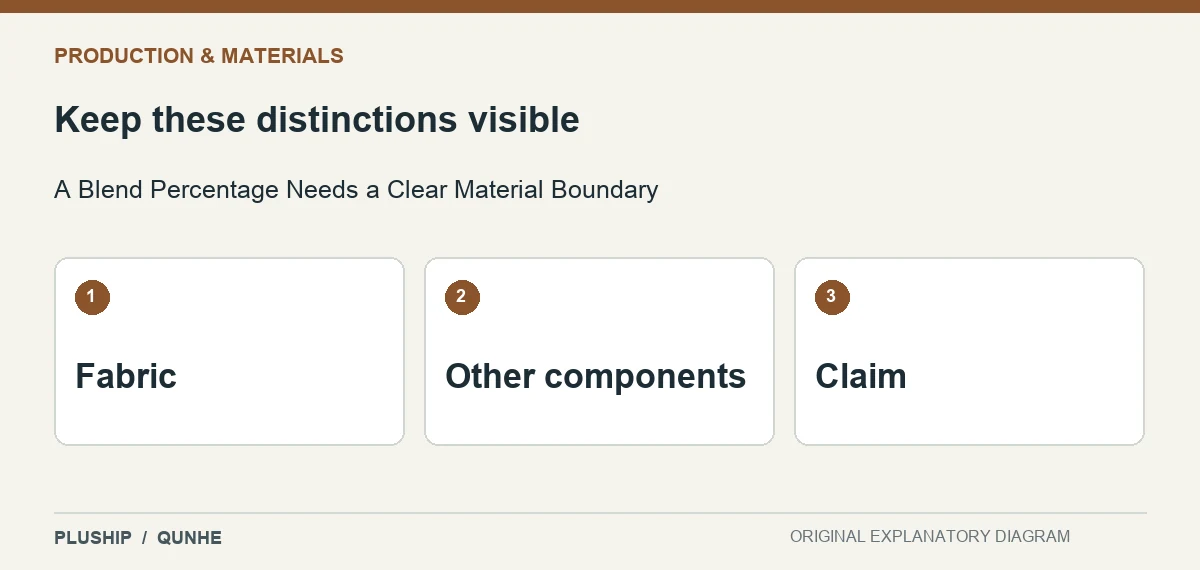
For a multi-material character, distinguish the main fabric from decoration, filling and other components. Use verified supplier information and the applicable destination-market requirements for the actual label.
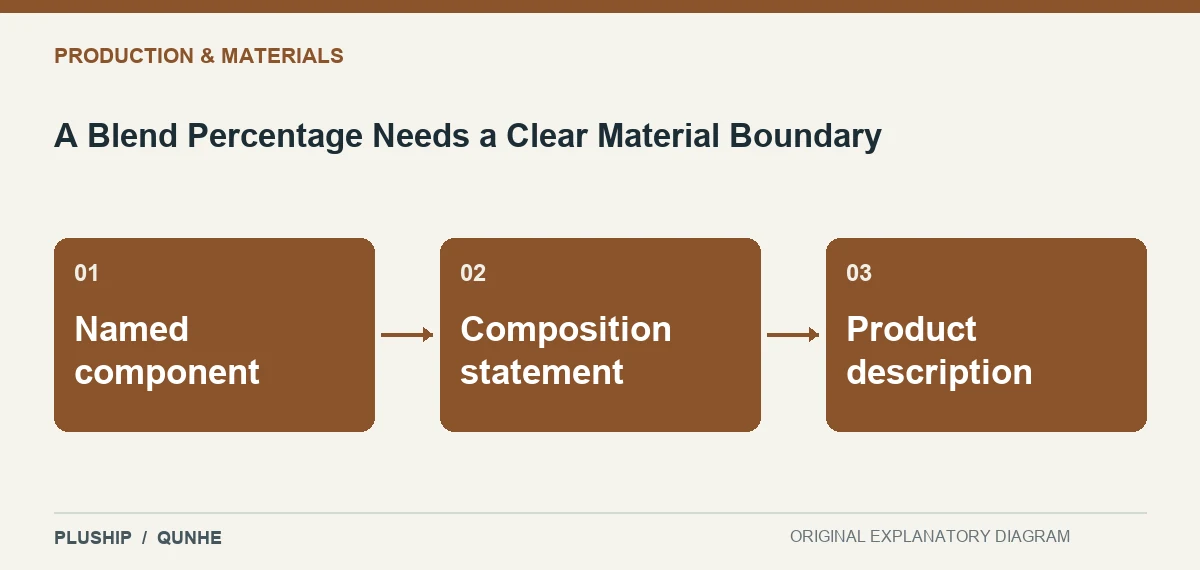
Keep the claim traceable
If the material changes, revisit the affected description. Do not complete an unknown whole-product percentage by borrowing the main fabric's figures. A precise-looking number is useful only when its scope and evidence are clear.
Source reviewed 25 October 2026. Interpretation and original diagrams: PLUSHIP / Qunhe. Examples are illustrative.
Related reading
Small Embroidered Lettering Needs a Material-Specific Trial
Stitch Spacing and Stitch Density Need a Clear Convention