
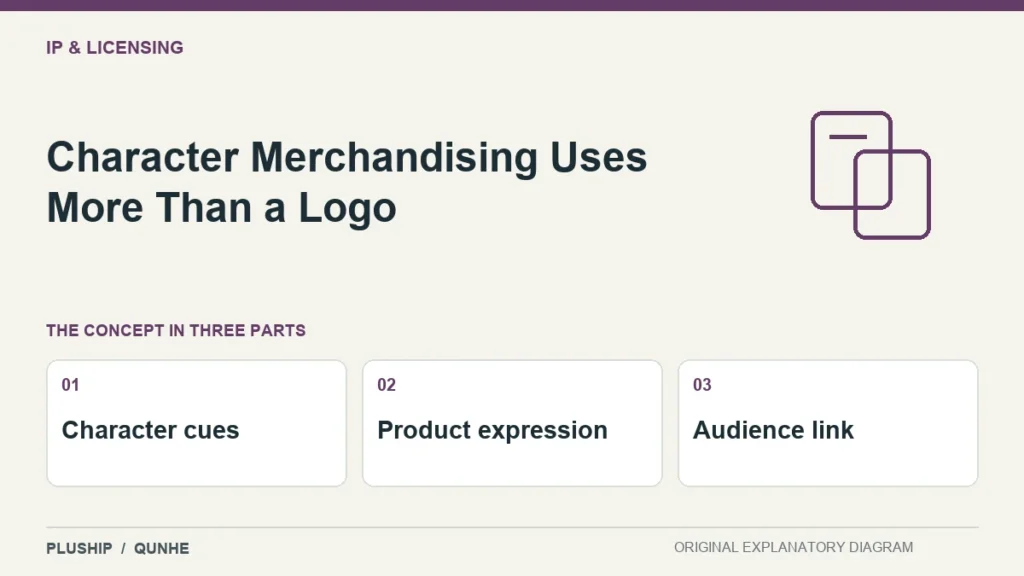
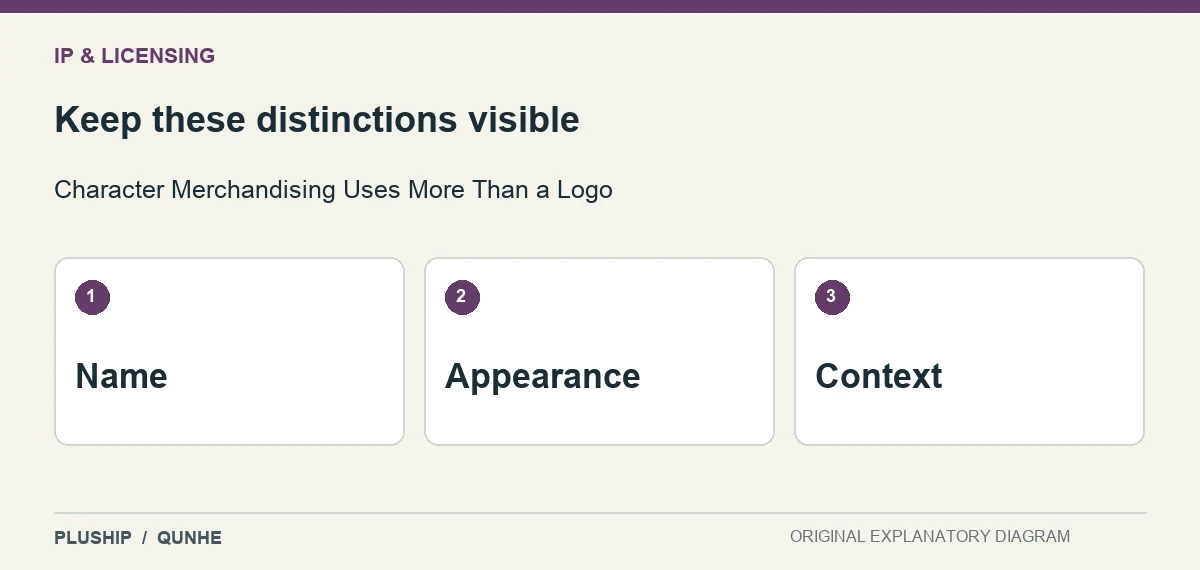
A character-led product may depend on its name, appearance or recognisable personality cues. A logo-placement brief can miss that wider creative relationship.
WIPO's 1994 character-merchandising report describes commercial use of character features. It is background material, not a statement of current local law. WIPO — Character Merchandising (1994 background report).
Identify the features doing the work
For a hypothetical food mascot, list the outline, expression, phrase and accessory that make the character recognisable. Then distinguish the features the new plush proposal actually uses. This exercise is more useful than labelling an entire mood board “the IP”.

Keep the legal and creative reviews connected
A design reviewer can judge whether the character remains recognisable. The responsible rights reviewer must assess the intended commercial use and relevant arrangements separately. Neither decision should silently stand in for the other.
Use the feature list to brief the sample team and the source record to support the rights discussion. A clear connection between them helps prevent a seemingly small creative adaptation from being overlooked in the project handover.
Source reviewed 25 October 2026. Practical interpretation and original illustrations by PLUSHIP / Qunhe; examples are illustrative.
Related reading
A Character Cast Can Support More Than One Product Story
Character Engagement and Sales Are Different Measures