
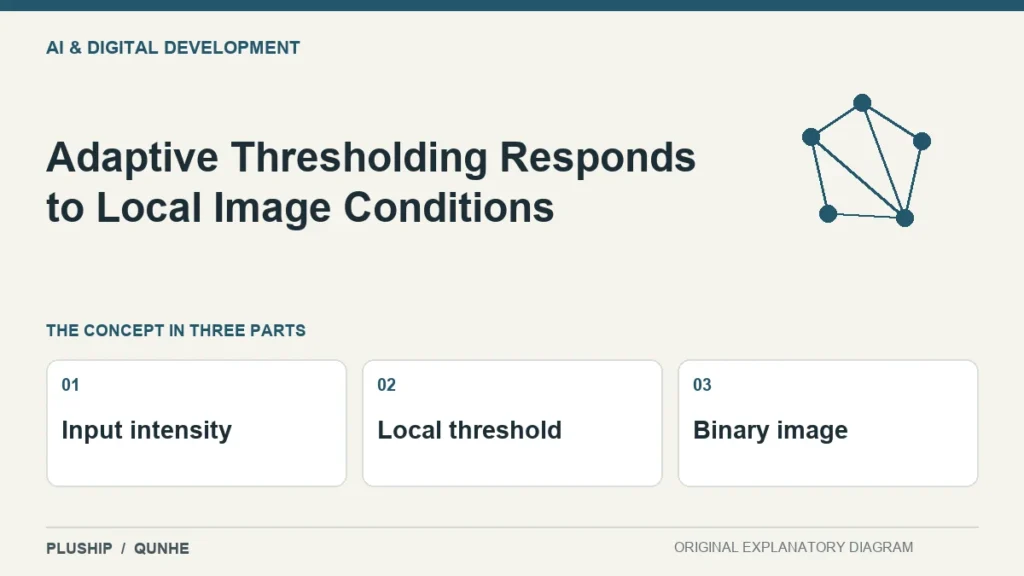
Uneven illumination can make one global intensity threshold unsuitable across an image. A locally determined threshold offers another preprocessing option, with its own trade-offs.
OpenCV distinguishes global and adaptive image-thresholding methods. OpenCV — threshold.
Inspect the relevant detail
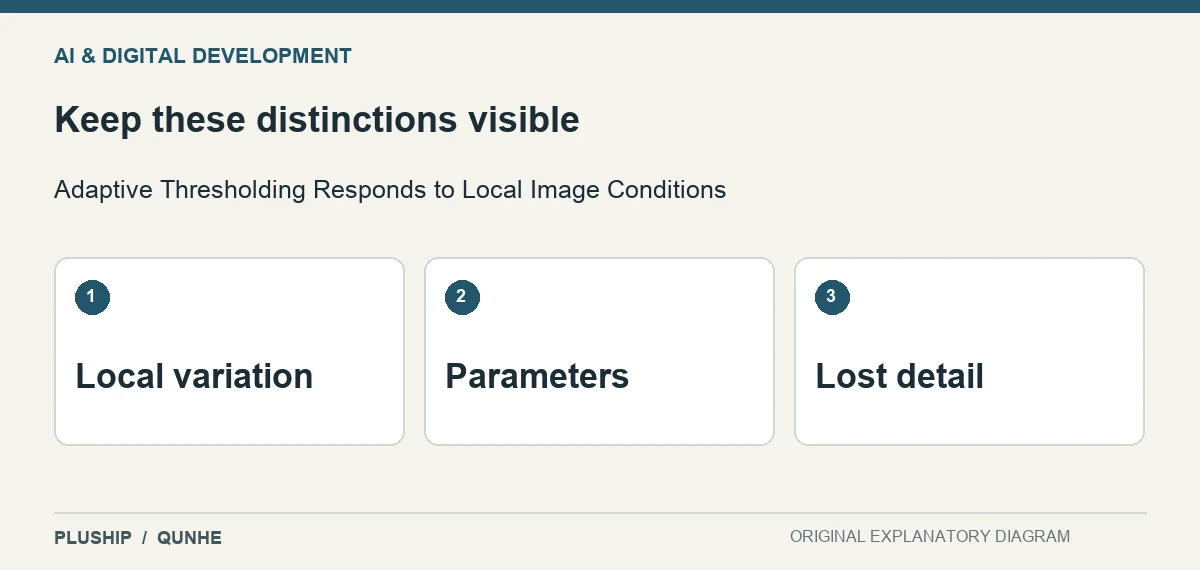
For a printed-label image, compare whether faint characters and background texture remain distinguishable. A cleaner-looking binary image can still erase important information.
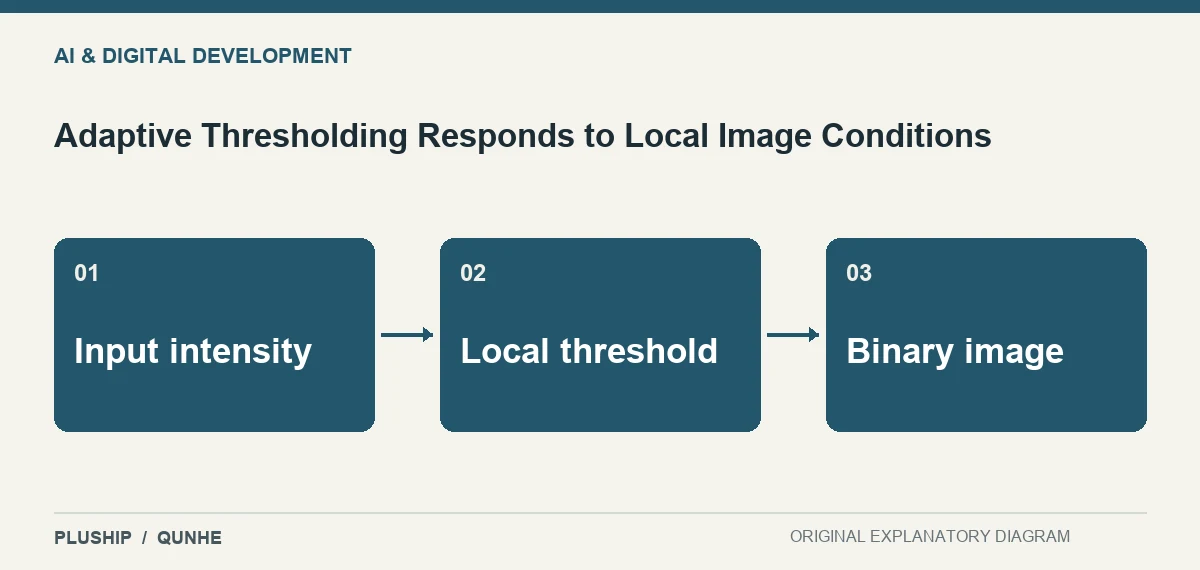
Evaluate the task outcome
Choose preprocessing based on the downstream result, such as reviewed text recognition, rather than visual neatness alone. Keep the original and processing settings. Thresholded pixels are a derived representation and should not replace the source image in the evidence record.
Source reviewed 25 October 2026. Interpretation and original diagrams: PLUSHIP / Qunhe. Examples are illustrative.
Related reading
Colour Thresholding Finds a Pixel Range Under Defined Conditions
An Unusual Image Is Not Automatically a Defective Product