
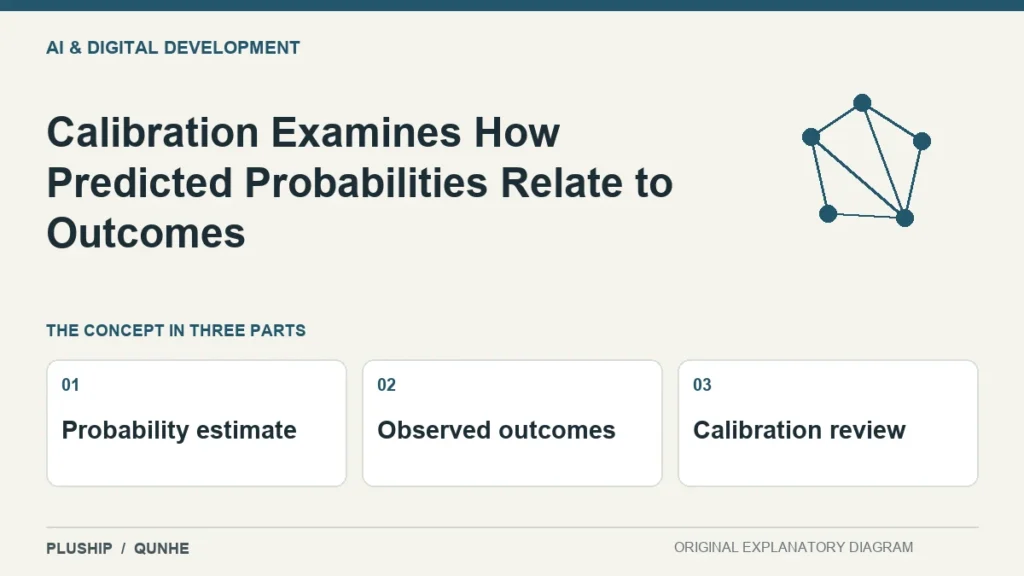
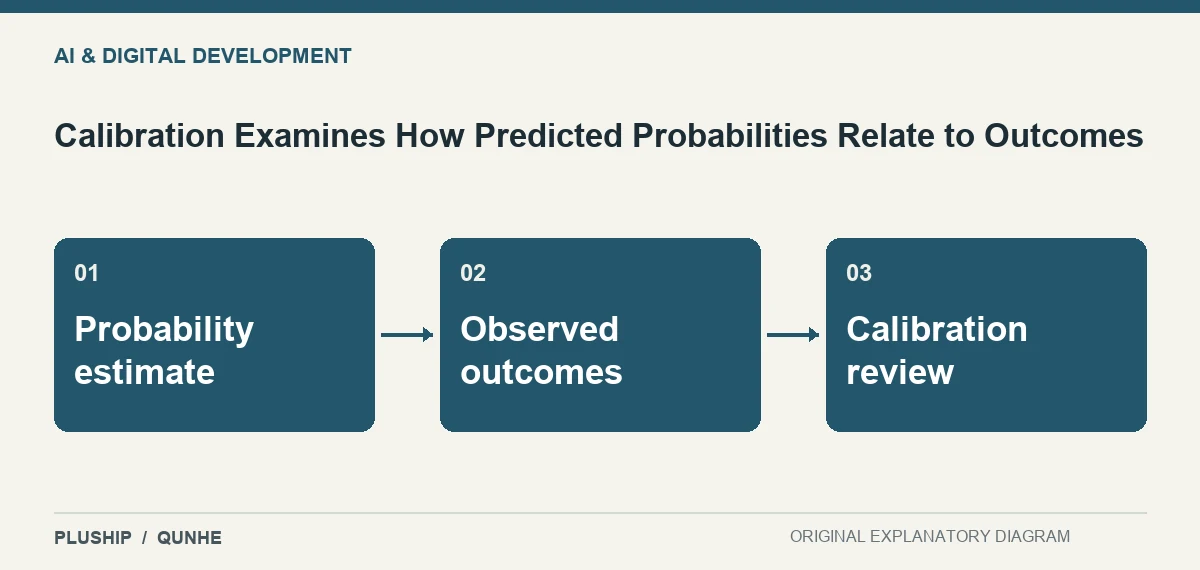
A model that produces a probability-like number is not automatically well calibrated. Calibration concerns how those estimates correspond to observed outcomes across comparable cases.
Scikit-learn discusses calibration curves and methods for assessing predicted probabilities. Scikit-learn — calibration.
Evaluate the relevant population
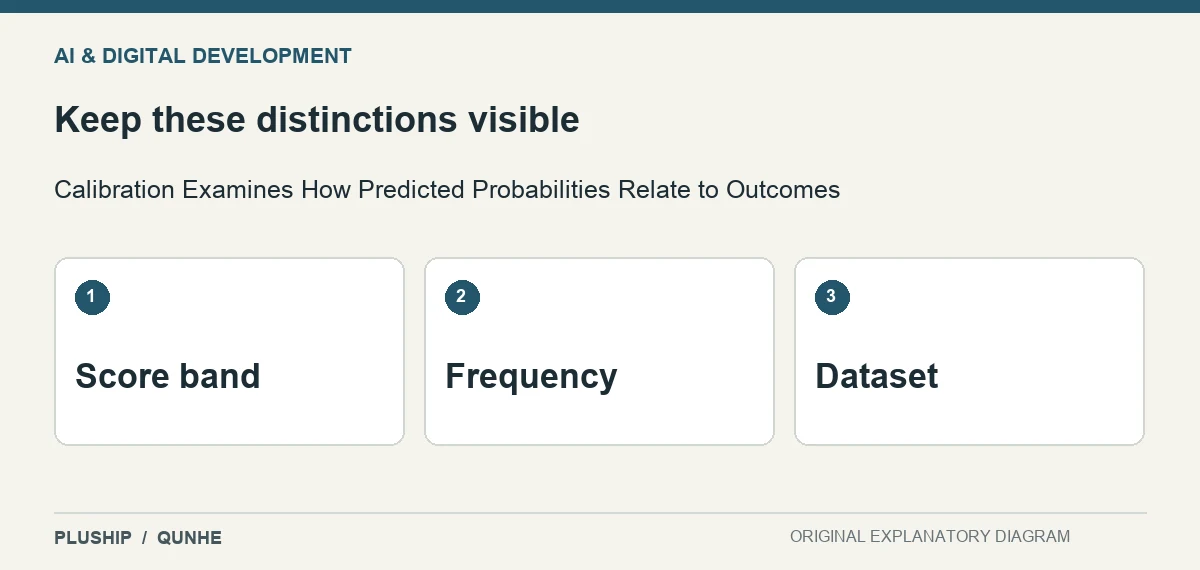
For a review queue, examine calibration using data that reflects the intended task. A curve from another product family does not settle how scores behave on unfamiliar photographs.
Keep the decisions separate
Calibration and discrimination answer different questions: ordering difficult cases well does not guarantee accurate probability estimates. Any calibration procedure also needs a suitable evaluation design. Do not label a score as the physical probability that an individual product is safe or compliant.
Source reviewed 25 October 2026. Interpretation and original diagrams: PLUSHIP / Qunhe. Examples are illustrative.
Related reading
Contour Area in Pixels Needs Calibration Before Physical Interpretation
Object Detection Can Locate a Detail Without Measuring Its Quality
Instance Masks Separate Individual Objects in a Product Photograph