
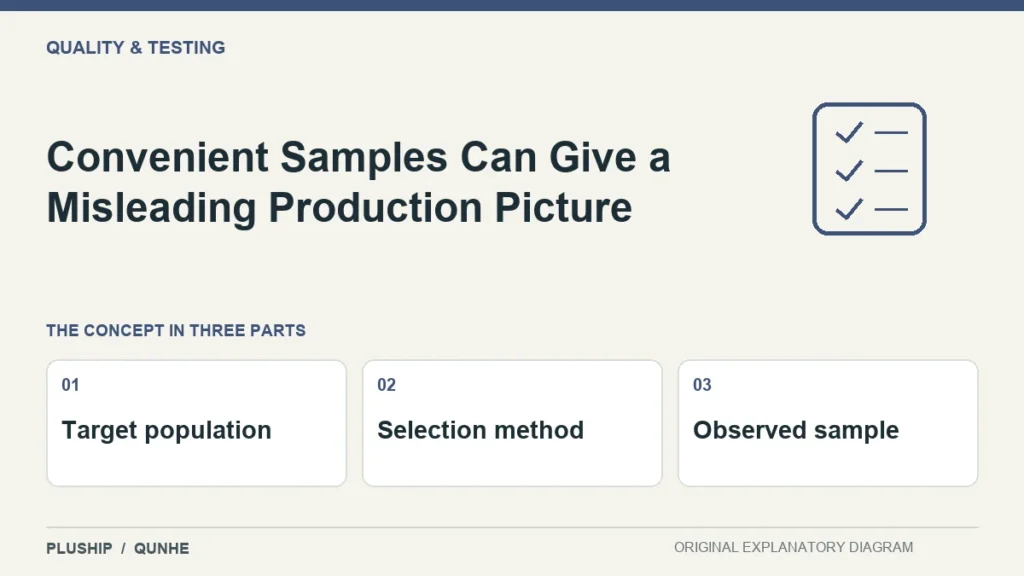
The easiest items to reach may not represent the production population being discussed. Sample selection deserves attention before the results are used to describe a whole lot.
ASQ's sampling guidance discusses selection, randomisation and potential sampling errors. ASQ — sampling.
Define the population first
State which production, locations or time period the question concerns. Then use a suitable selection method. A set chosen because it looks good or is already unpacked answers a narrower question than a properly designed population sample.
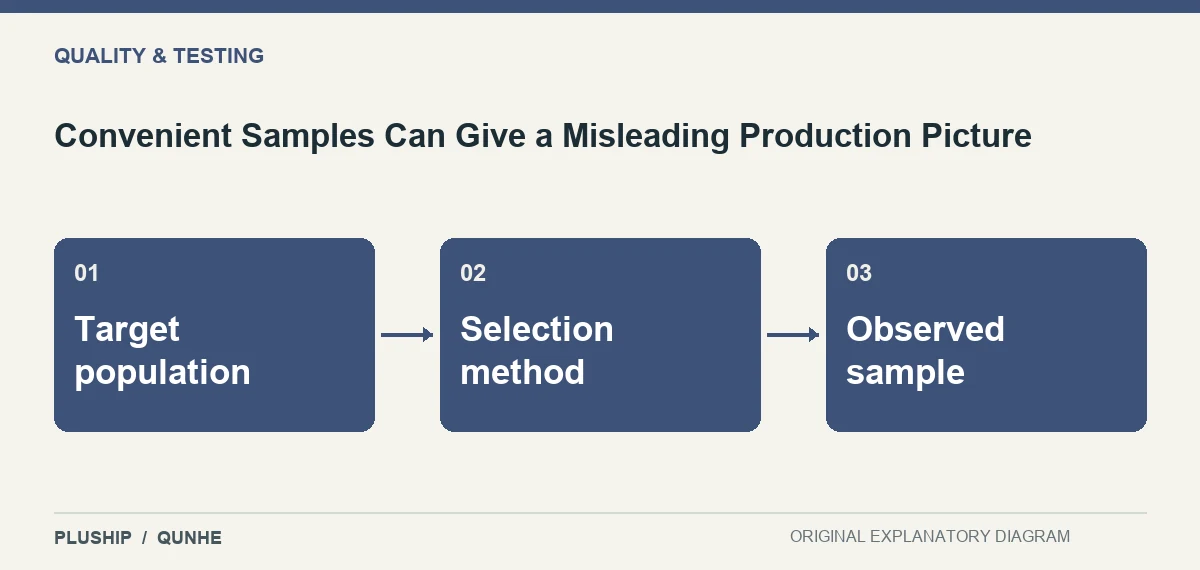
Record practical deviations
If access limits the selection, describe the limitation rather than silently presenting the result as representative. Ask whether additional evidence is needed before making the intended decision. A larger convenient sample does not automatically remove selection bias.
For soft-product production, preserve the relevant lot and packaging context. The record should let another reviewer understand how the inspected items relate to the population named in the conclusion.
Source reviewed 25 October 2026. Practical interpretation and original illustrations by PLUSHIP / Qunhe; examples are illustrative.
Related reading
Quality Assurance and Quality Control Address Different Questions
Quality Cost Includes More Than Rejected Products