
Turning a flat drawing into a soft form involves several kinds of work. A public process example can help a designer see where interpretation enters the project.
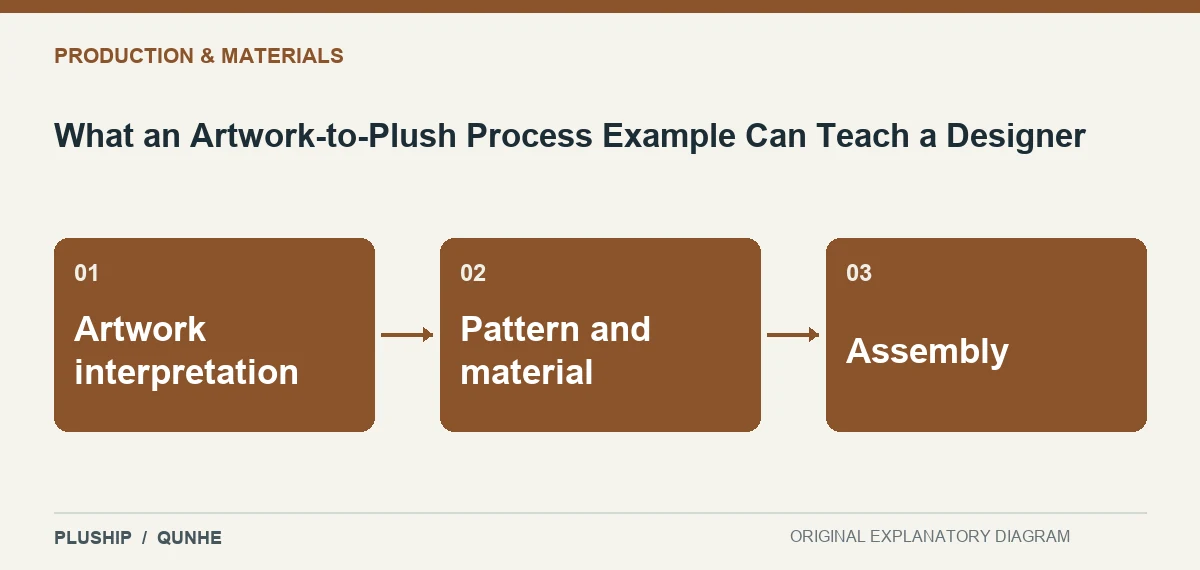
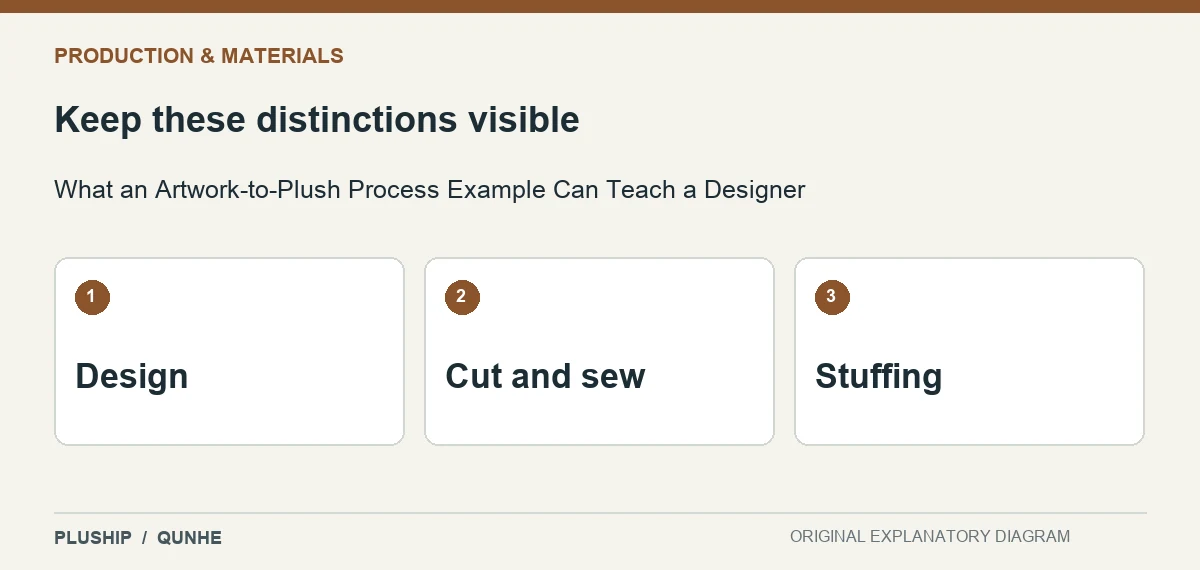
Budsies describes design interpretation, pattern work, material selection, cutting, sewing and stuffing in its own artwork-to-plush process. Budsies — How we make custom stuffed animals.
Treat the example as one process
The company describes its approach, not a universal production standard. Use it to identify questions for the proposed supplier: who resolves unclear views, how is shape developed, and what evidence shows the result before further production?
Locate the design decisions
A drawing can leave thickness, rear features and material transitions unresolved. Those gaps need deliberate decisions. If they are left implicit, the first physical interpretation may be mistaken for something the artist already specified.
The useful lesson is that a drawing does not contain every instruction for a three-dimensional form. PLUSHIP's discussion here is an interpretation of a public example and does not imply a relationship with the company.
Source reviewed 25 October 2026. Practical interpretation and original illustrations by PLUSHIP / Qunhe; examples are illustrative.
Related reading
Variable Stitch Density Is a Process Question Before It Is a Style Choice
A Seam and a Stitch Describe Different Parts of a Sewn Product