
An uneven-looking stitch pattern can arise from more than one condition. Describe the observation before deciding what caused it or prescribing a new setting.
Coats lists variable stitch density among sewing problems and discusses process-related causes and remedies. Coats — Solving Your Sewing Problems.
Record where the variation occurs
Compare the affected section with the rest of the join and retain the material and operation references. Ask whether the difference is intentional in the proposal. A photograph alone may be insufficient to distinguish an appearance choice from a process issue.
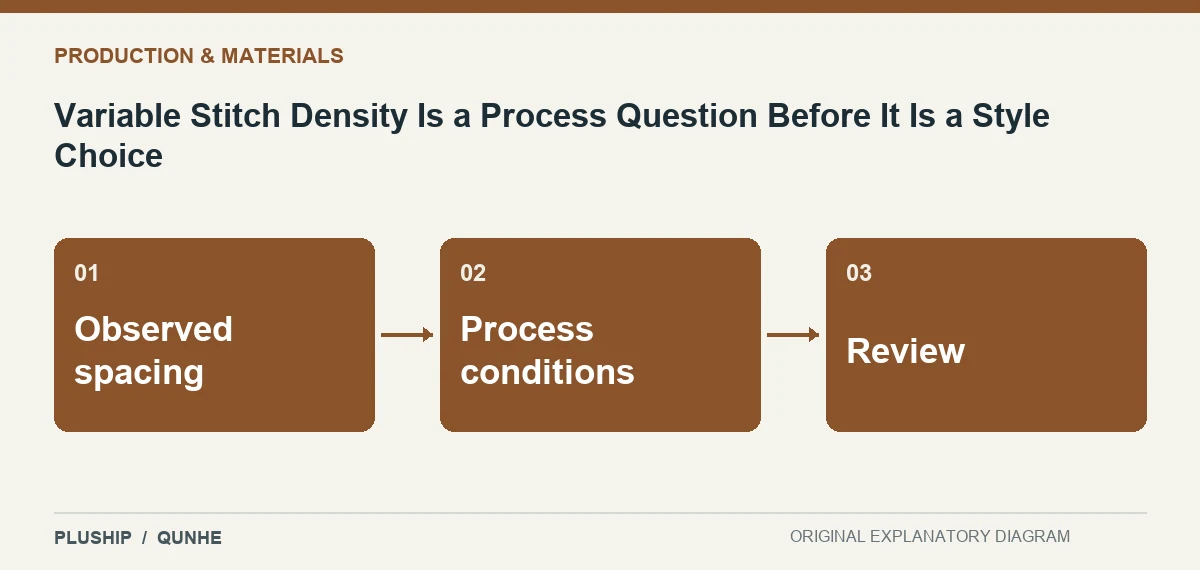
Use a controlled technical review
Give the evidence to the responsible sewing specialist and keep proposed adjustments within an appropriate machine and material trial. Avoid treating a generic number from another application as a universal solution.
After a change, compare the relevant result with the agreed requirement. The useful record connects the observation, investigated cause and actual outcome instead of reporting the issue resolved when someone merely changed a setting.
Source reviewed 25 October 2026. Practical interpretation and original illustrations by PLUSHIP / Qunhe; examples are illustrative.
Related reading
A Seam and a Stitch Describe Different Parts of a Sewn Product
What an Artwork-to-Plush Process Example Can Teach a Designer
Understand the Thread Numbering System Before Comparing Sizes