
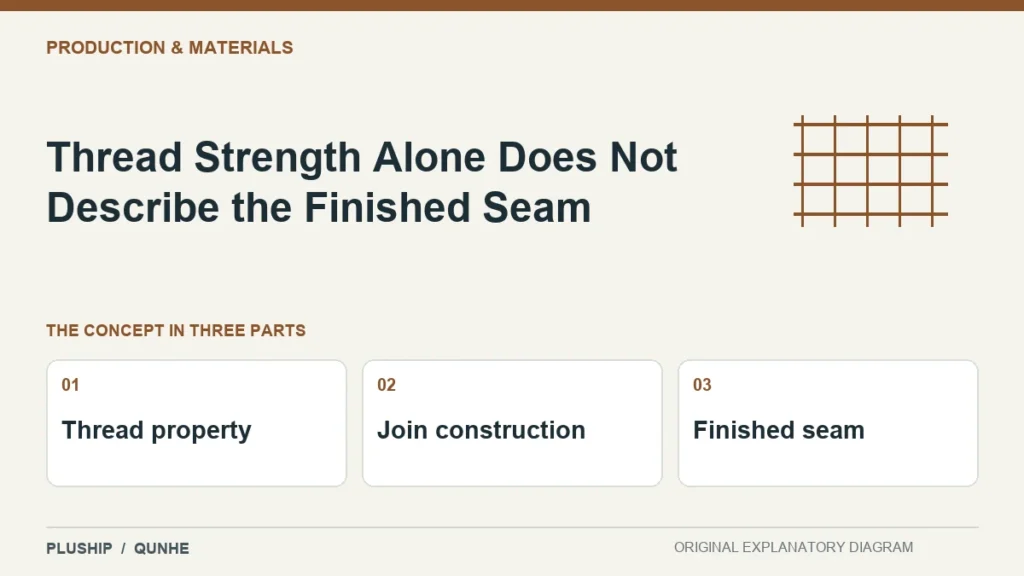
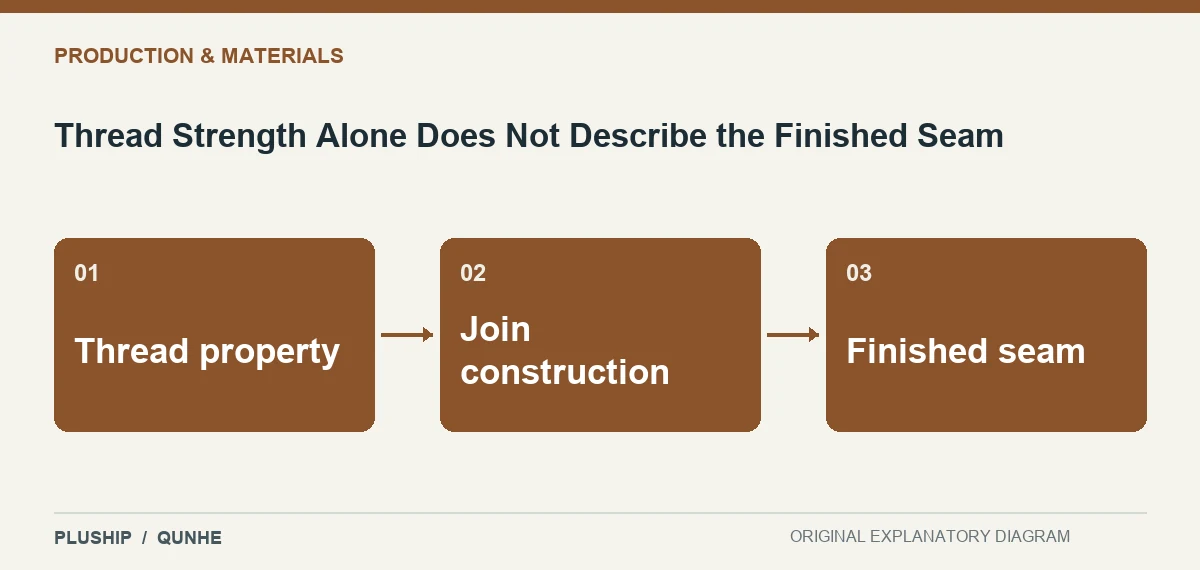
A strong thread does not, by itself, establish that a finished join meets its requirements. The connection includes material layers and a particular construction.
Coats' seam guidance distinguishes seam arrangements and discusses their use with different stitch types. Coats — Seam Types.
Ask what the evidence covers
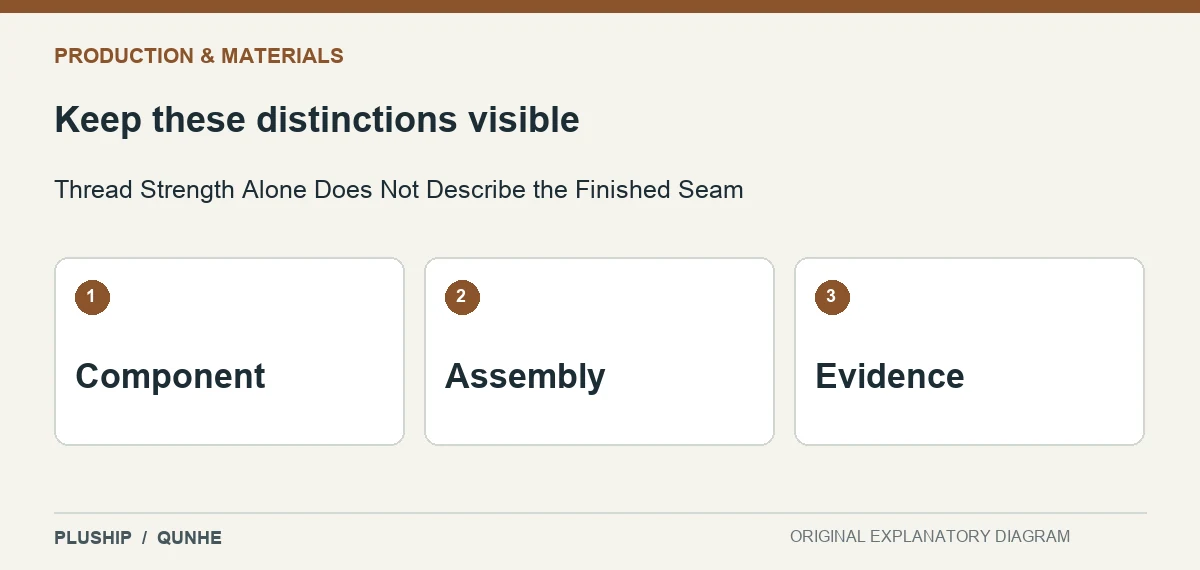
A supplier's thread property describes one input. A finished-seam evaluation addresses the assembled construction under a stated method. Keep these evidence types separate when reviewing a proposed product.
Examine the failure location
If an evaluation identifies a problem, record where and how the assembly changed. A broken thread, damaged base material and opened join are different observations. They may require different investigations even when the outward complaint is simply that the seam failed.
For a plush form, include the relevant shape and material combination in the review. An acceptable thread specification is a starting condition, while the final assembly still needs the applicable evidence.
Source reviewed 25 October 2026. Practical interpretation and original illustrations by PLUSHIP / Qunhe; examples are illustrative.
Related reading
A Seam and a Stitch Describe Different Parts of a Sewn Product
Sewability Means More Than Thread Breaking Strength
A Corespun Description Does Not Replace a Complete Thread Specification