
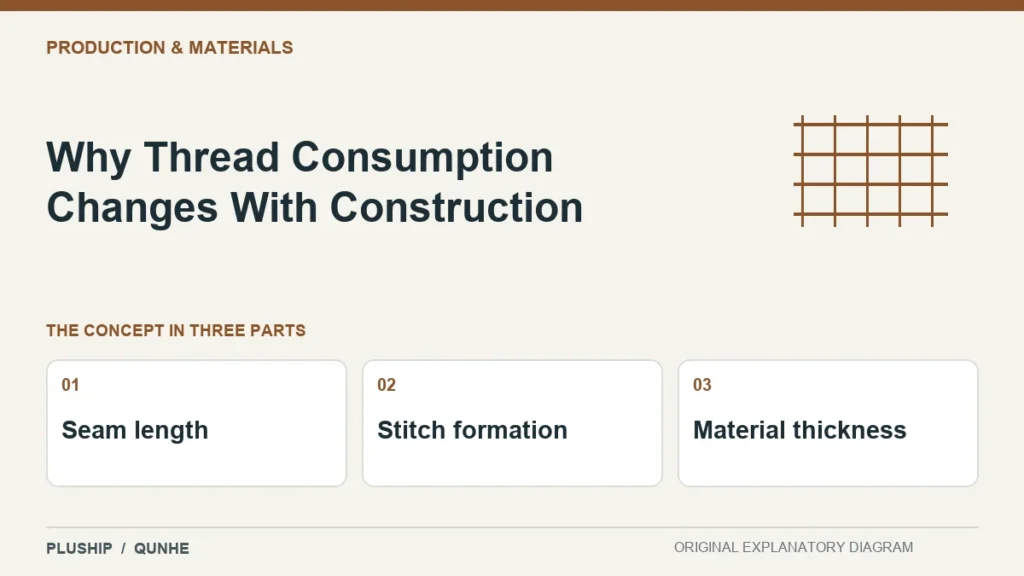
Two products with a similar outline can consume different amounts of thread. The visible perimeter is only one input to an estimate.
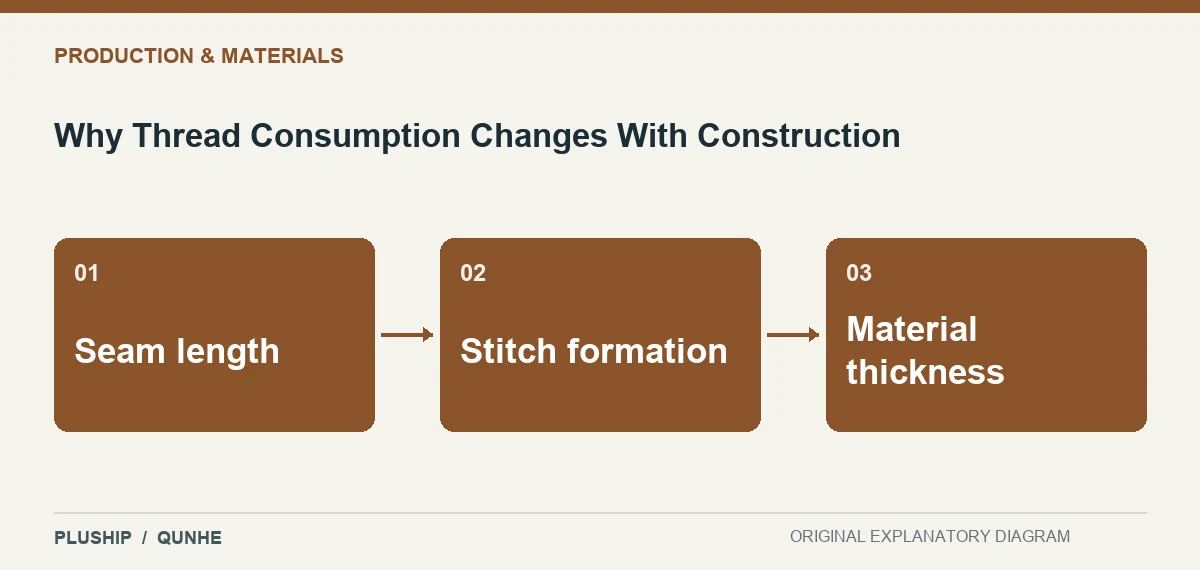
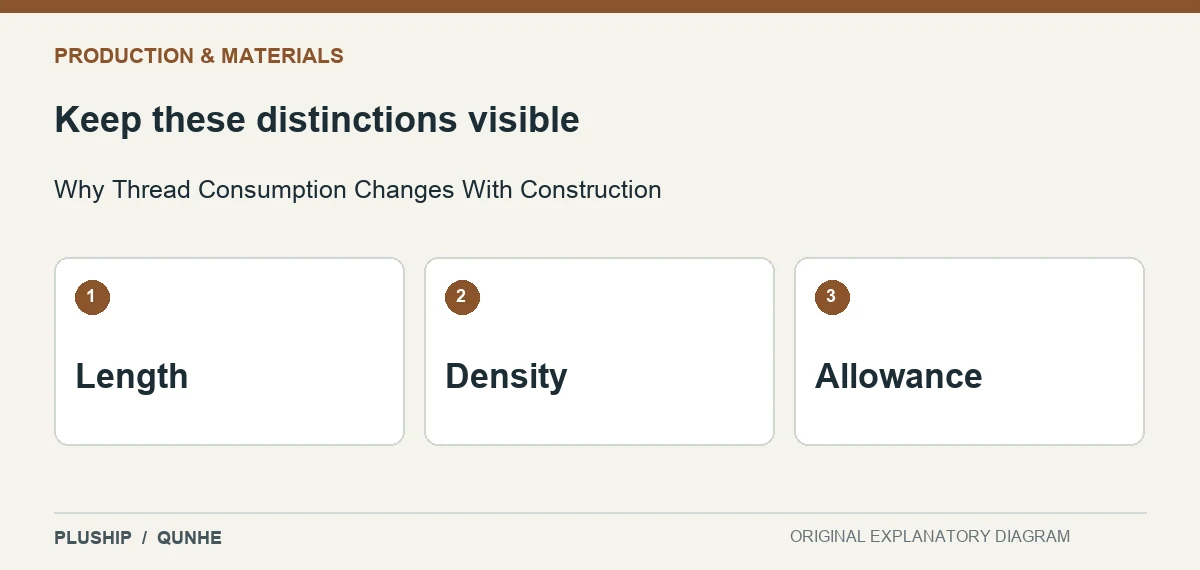
Coats' consumption guide discusses stitch type, stitch density, material thickness and seam length as relevant factors. Coats — Thread Consumption Guide.
Define the estimate's boundary
State which joins are included and whether the figure covers assembly, decoration or both. Use the actual proposed construction. A decorative detail added late in development should not disappear inside a consumption estimate made before it existed.
Separate the estimate from purchasing
Show the calculation basis and identify any additional allowance separately. An estimate for thread incorporated into a sample is different from the quantity to issue or buy. Do not present an unexplained single number as though every loss and process condition were already known.
The useful comparison is between a documented estimate and observed use under a defined process. That gives the team a reasoned basis for revising the next calculation.
Source reviewed 25 October 2026. Practical interpretation and original illustrations by PLUSHIP / Qunhe; examples are illustrative.
Related reading
Material and Thread Changes Can Contribute to Puckering After Treatment
Lockstitch and Chainstitch Use Different Thread Formations
Thread Elongation and Elastic Recovery Are Different Properties