
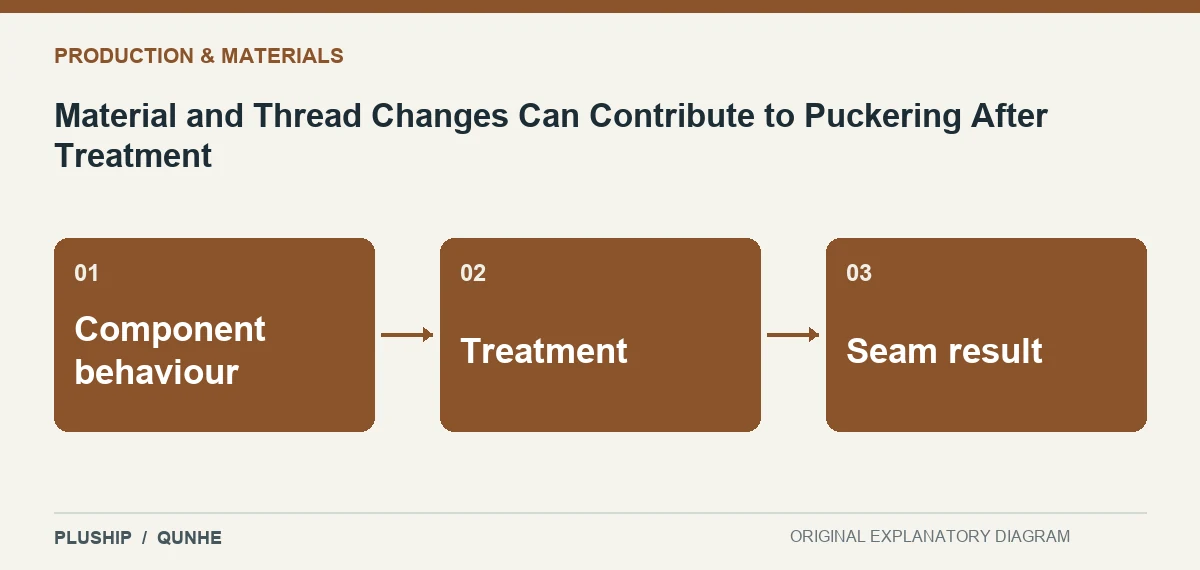
A seam's appearance after treatment depends on the combination, not just the initial sewing result. Keep the relevant treatment and component information with the comparison.
Coats discusses fabric and thread instability among possible causes of seam puckering. Coats — Eliminating Seam Puckering.
Evaluate the proposed product
Identify the actual material, thread and intended care or processing route. Ask the responsible technical reviewer which evidence is appropriate. Do not infer the finished result from separate component descriptions or from a sample that has not undergone the relevant process.
Record the difference precisely
Distinguish the observed appearance from the proposed explanation. If a component changes, assess the new combination rather than transferring acceptance automatically. Keep the earlier evidence as context for the comparison.
The useful decision concerns the actual finished construction and its relevant conditions. General guidance can identify a mechanism to investigate, but it cannot supply a universal treatment instruction or a product-specific performance guarantee.
Source reviewed 25 October 2026. Practical interpretation and original illustrations by PLUSHIP / Qunhe; examples are illustrative.
Related reading
Why Thread Consumption Changes With Construction
When Material Displacement Contributes to Seam Puckering