
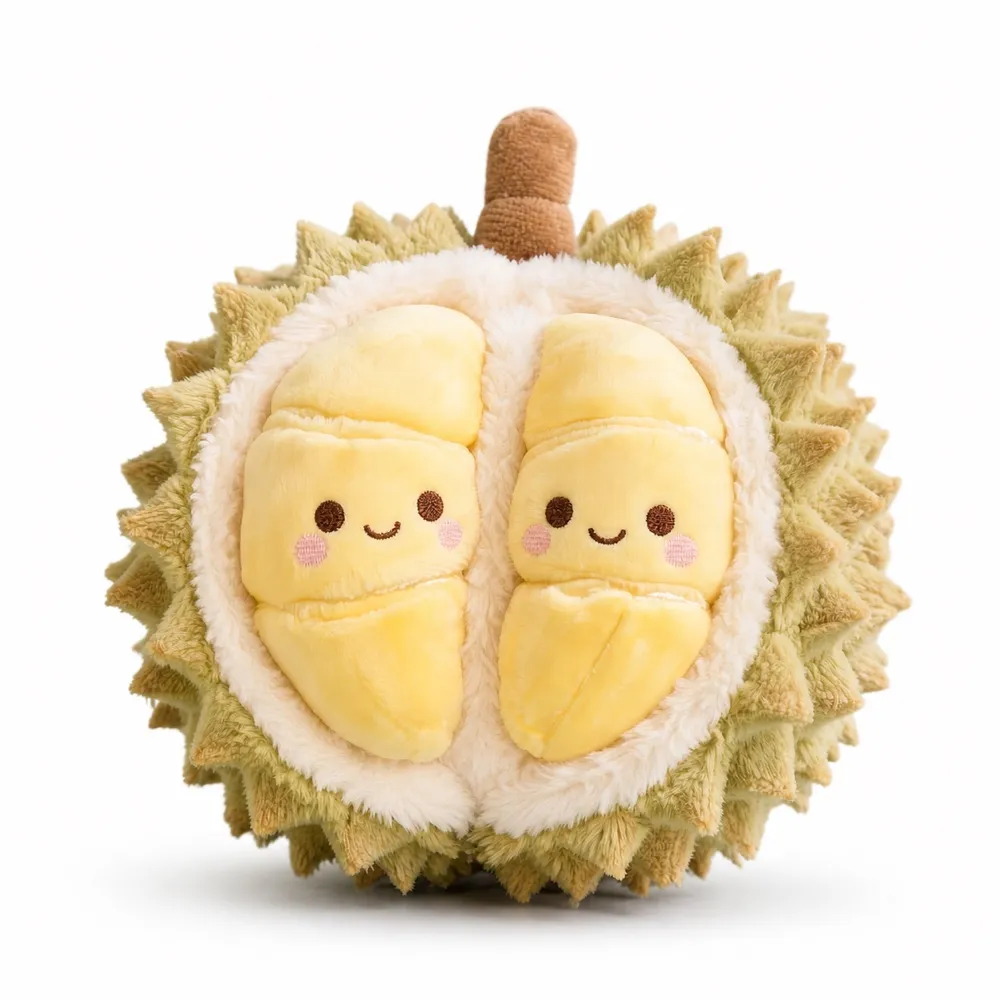
Compare shape, surface treatment and recognisable details when assembling a tropical fruit plush range. Several bright colours can still produce a confusing assortment if the characters have similar outlines or the buying sheet does not distinguish them clearly.
Use contrasting forms
The Durian shows yellow segments inside an open shell. A pineapple uses a leafy crown, while a coconut with a straw suggests a different composition. These differences give a buyer something more concrete to compare than a list of fruit names.
Keep each product reference with its image. A small thumbnail can hide the feature that distinguishes one character from another.
Check scale before arranging the group
Catalogue photographs do not establish relative size. Request dimensions for the actual selections before designing a shelf layout or multi-product box. Mark whether a stated height includes leaves, stems or other projecting details.
If two products are only alternatives, keep them out of the confirmed total until the selection is settled. This avoids turning a visual moodboard into an unintended order mix.
Write one identifying line per design
Use the distinctive feature: open fruit segments, leafy crown, or cream top with straw. Leave broad claims such as premium, best-selling or universally loved out unless there is evidence to support them. A buyer needs to identify the product before evaluating an endorsement.
How many designs should the range contain?
There is no catalogue-wide answer. Start from the retailer's available space, intended use and proposed quantities, then ask about order requirements for that mix. Do not assume every listed character can be combined in any quantity.
Explore the fruit collection and retain separate references for the shortlisted tropical designs.