
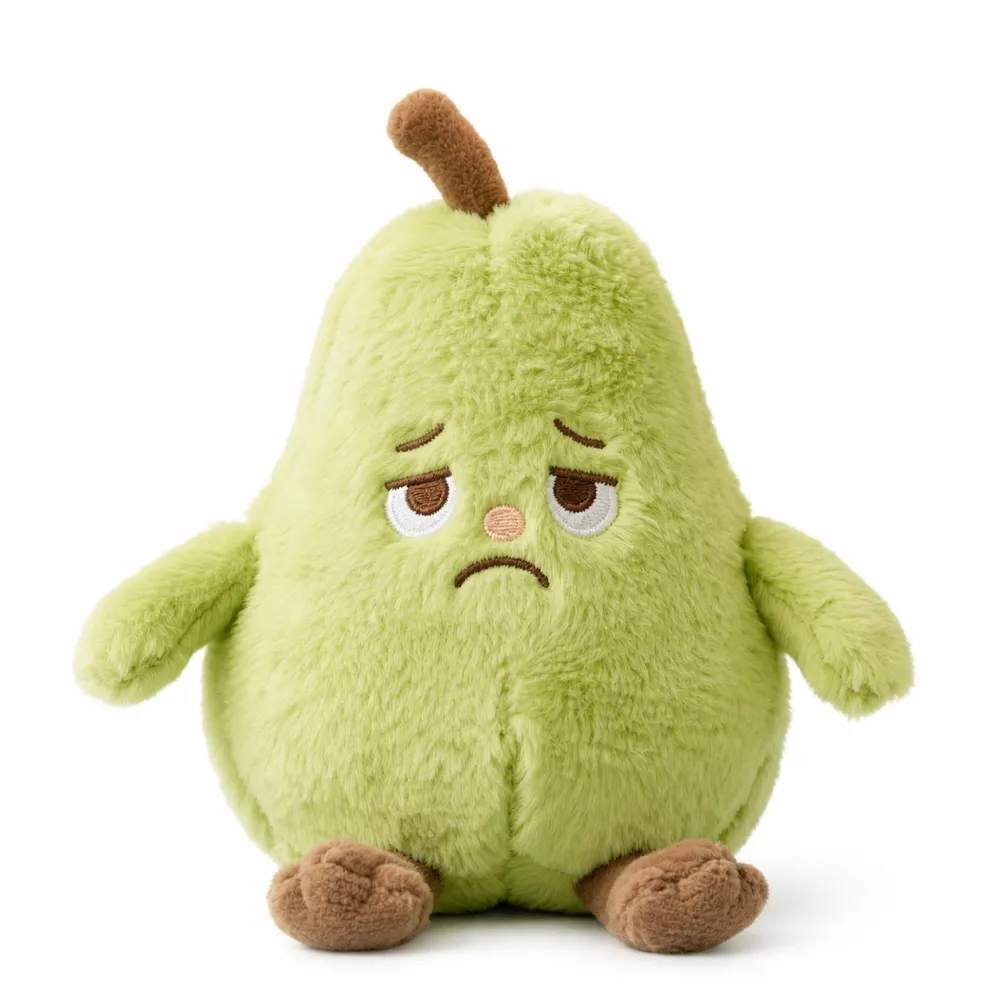
Keep the stable product reference when translating a plush catalogue. The display name may change across languages, but the same identifier should still lead buyers and staff to the same design or selected option.
Decide which words describe the product
The Ya Pear includes a specific fruit name, while Surprised Pear identifies another character partly through its expression. Preserve the distinction in the translated name. Replacing both with pear toy can make different references look interchangeable.
Where a fruit name is unfamiliar to the intended audience, add a short explanation rather than silently changing it to a more familiar fruit.
Preserve option and accessory details
A translated title should still distinguish black jacket from green jacket, whole fruit from slice, and one scarf colour from another. Put the original reference beside the translation in the working sheet so reviewers can compare the two easily.
Check text that is actually visible on clothing separately. Translating the marketing title does not mean the wording on the supplied product has changed.
Review claims in both languages
A cautious source description should not become a stronger promise in translation. Keep unconfirmed materials, dimensions and ordering terms out of both versions. Ask a suitable language reviewer to check any ambiguity important to the buying decision.
Should each language receive a new internal SKU?
A translated display name alone is not a reason to lose the original mapping. Record any genuinely different supplied product separately, and keep the language version connected to its source record.
Use the line-sheet fields to maintain the names, identifiers and options during translation.