
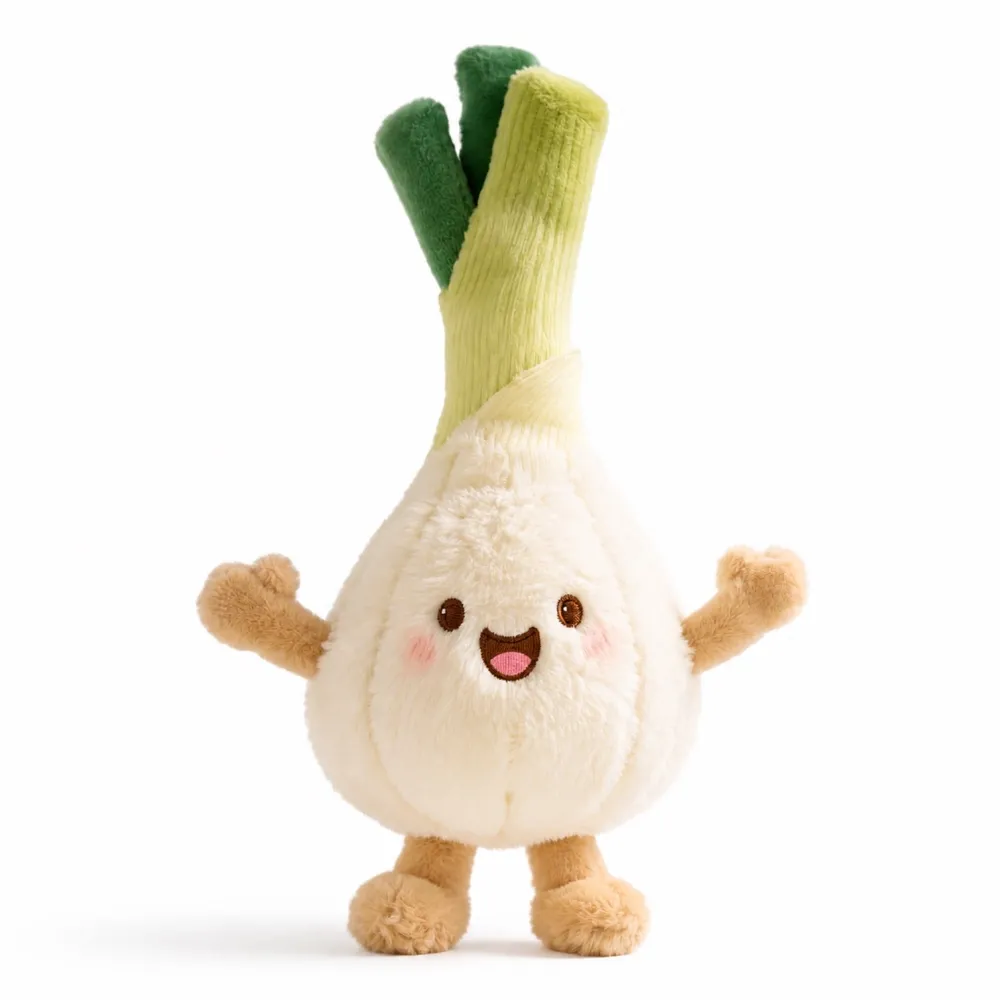
A useful plush dimension states both the measurement and its start and end points. “30 cm” can mean body height, total height including leaves, or length in a resting pose. Agree the measurement method before using that number in a product specification or packaging plan.
Separate the body from the overall outline
The Spring Onion has a cream body and tall green leaves. An overall height and a body-only height answer different questions. Similar distinctions apply to pony manes, dragon accessories and fruit stems. A labelled measurement photo is clearer than a number beside an unrelated catalogue image.
For an irregular shape, record height, width and depth. Name the normal pose used for the measurements rather than stretching the character to obtain a larger figure.
State how it rests during measurement
A seated character measured upright may differ from the same character laid flat. Choose a repeatable position and show the ruler or tape in the reference photo. Do not press or compress the product unless that is the expressly agreed method for a separate packaging measurement.
Use different figures for packaging
Product dimensions and packed dimensions are separate records. A gift box needs the packed arrangement, including any insert or accessory. A shipping estimate needs the actual carton information. Copying the body height into all three fields can create avoidable confusion.
Can two catalogue characters be assumed to match in scale?
No. Similar-looking photographs do not establish equal dimensions. Request measurements for each selected reference, particularly when several characters must fit one display or box.
Send the enquiry team a marked reference image and explain whether you need product, retail-pack or carton measurements.