
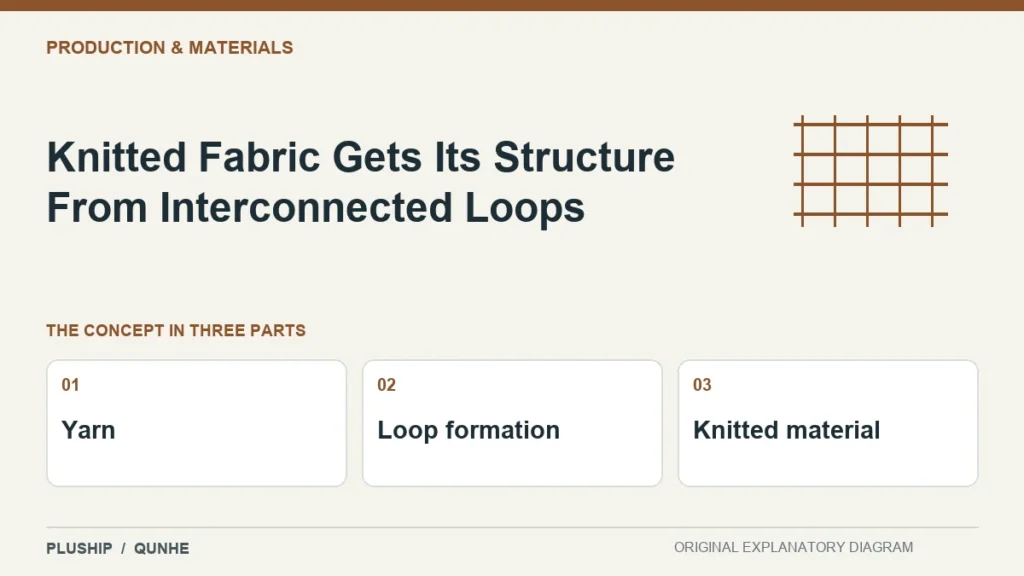
A knitted textile should not be understood solely through its fibre name. The loop structure contributes to how the material behaves during design and assembly.
CottonWorks describes knitting in terms of interconnected yarn loops. CottonWorks — Knit Basics.
Connect structure to the proposal
For a character panel, identify the actual knit and the behaviour the design needs. Do not assume all fabrics called knit have the same movement or surface appearance.
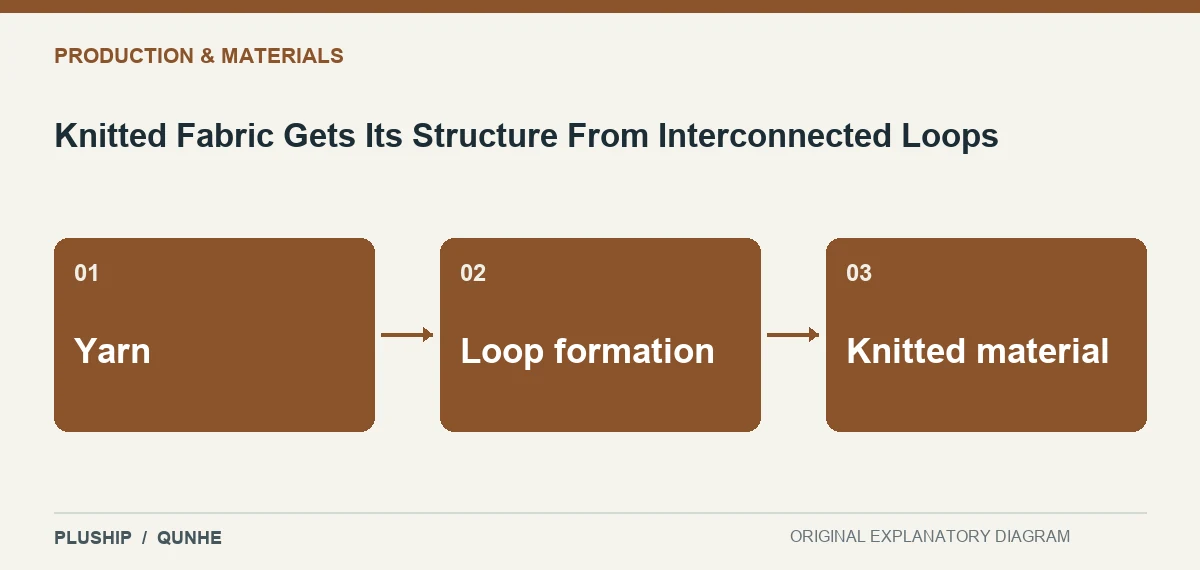
Preserve the evaluated combination
Review the material with the intended join, decoration and assembly. A loop-based description helps frame the question, but it does not supply a universal sewing setting or performance claim. Keep the selected material's identity with the sample so later substitutions can be assessed on the same basis.
Source reviewed 25 October 2026. Interpretation and original diagrams: PLUSHIP / Qunhe. Examples are illustrative.
Related reading
An Embroidery Fabric Preset Is a Starting Configuration
Fabric Construction Information Should Preserve Both Yarn Directions
A Fabric Finish Adds Another Layer to a Material Description