

A brief that begins with a finished character can conceal the problem the product is meant to solve. Step back long enough to describe the intended situation before refining the object.
The Design Council's Double Diamond distinguishes understanding and defining a problem from developing and testing solutions. The Double Diamond.
Describe the situation
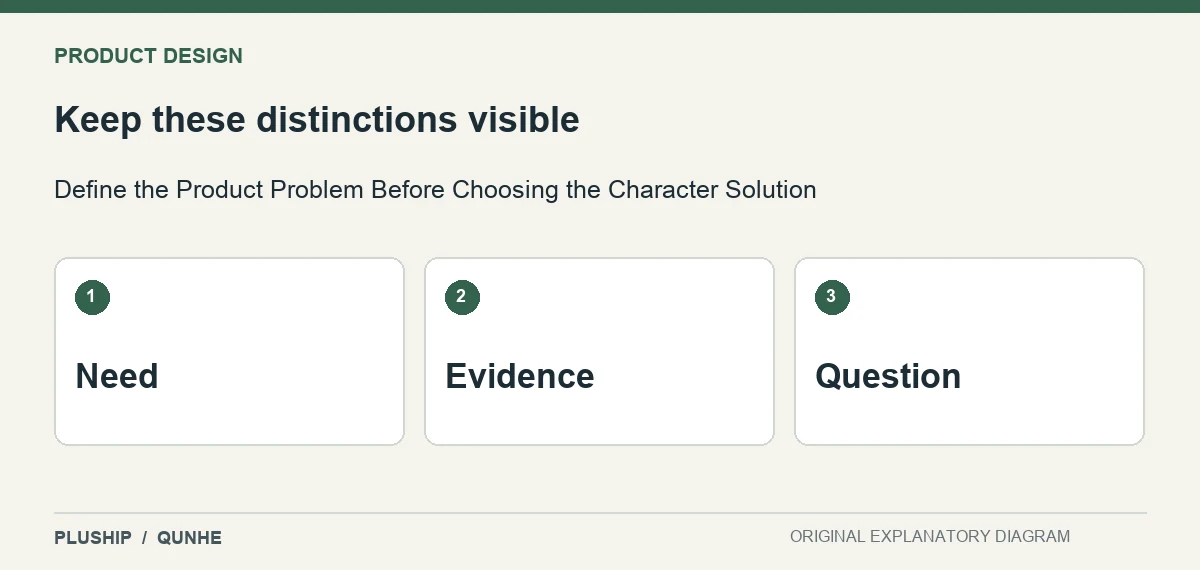
For an illustrative gift project, ask who is choosing, who is receiving and what the occasion requires. Keep observations separate from assumptions. “We need a mascot” describes a proposed answer; it does not explain why that answer is appropriate.

Make the design question usable
Write a concise challenge that leaves room for alternatives. Then test candidate ideas against the same challenge. If the evidence changes the question, record that change rather than forcing every observation to support the first sketch.
The result should make the next design decision clearer. It is a practical use of the framework, not a requirement to follow one rigid sequence or a claim that research guarantees a successful product.
Source reviewed 25 October 2026. Practical interpretation and original illustrations by PLUSHIP / Qunhe; examples are illustrative.
Related reading
Choose Experimental Factors Before Comparing Product Prototypes
Ask About Actual Behaviour Before Asking for Product Preferences
Ask How a Soft Product Comes Apart Before Calling It Circular